
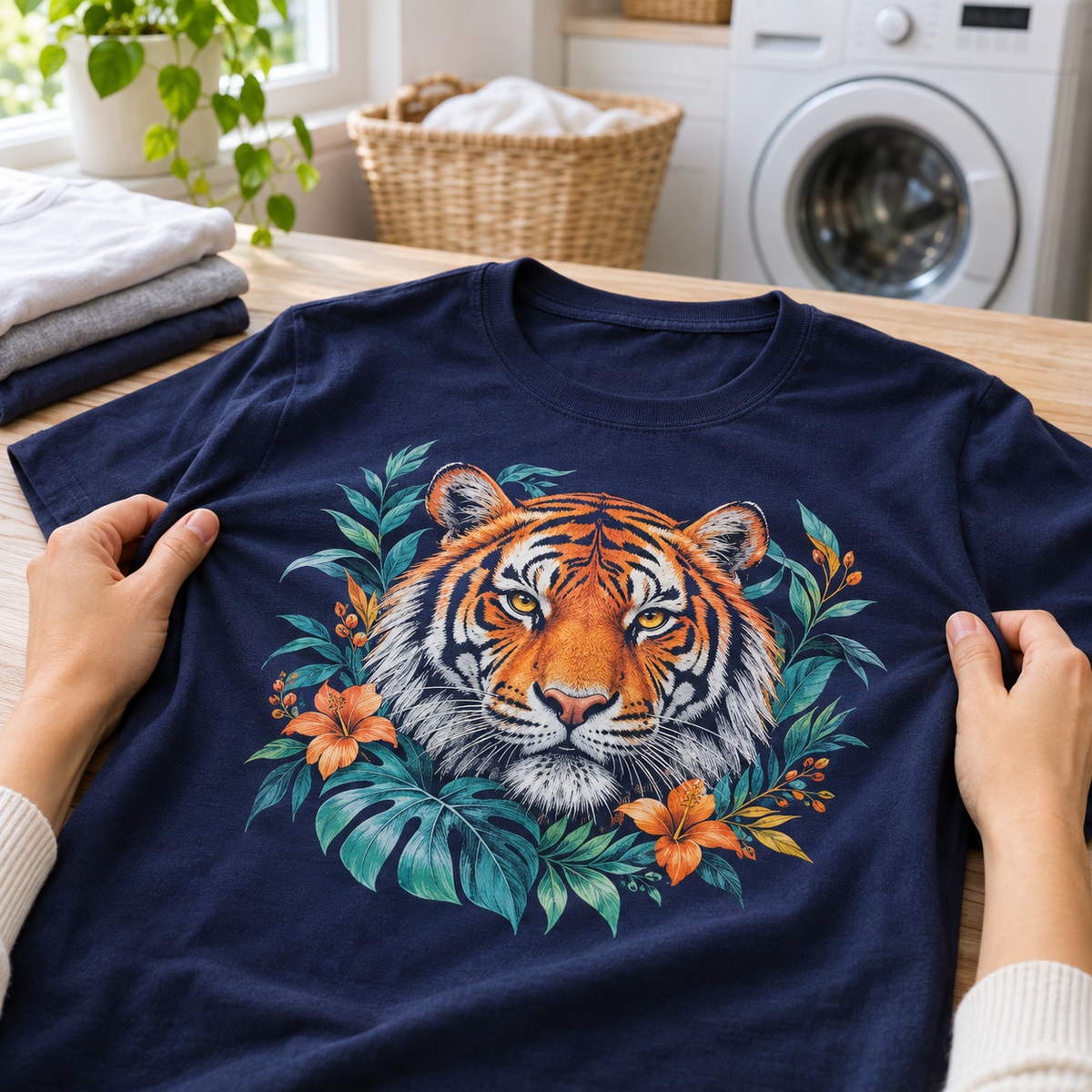
One of the first questions customers ask about a printed shirt is simple: "Will it last?" DTF (direct to film) transfers have earned a strong reputation for durability. They stay vibrant, stretch with the fabric and resist cracking far better than many older transfer methods. But how long a DTF print actually lasts depends on three things you control: the quality of the transfer, how it is pressed and how the garment is cared for. Here is what you need to know.
How Durable Are DTF Transfers?
A properly made and properly pressed DTF transfer is designed to hold up through many, many washes while staying bright and flexible. The printed ink layer is bonded to the fabric by a hot-melt adhesive powder, and that bond is what gives DTF its durability. In practice, a well-pressed DTF design will often last as long as the shirt itself is in good shape, as long as it is cared for correctly.
When DTF prints fail early, it is almost always because of one of the factors below, not because DTF is a weak method.
What Affects DTF Durability?
1. Transfer quality
Good DTF starts with good film, ink, powder and curing. Under-cured powder or a thin white ink layer can lead to cracking and poor wash results. That is why buying from an experienced printer matters. Our custom DTF transfers include step-by-step application instructions on the product page. Learn more about why the white layer matters in what is white ink in DTF printing.
2. Press temperature, time and pressure
Too little heat, too little time or too little pressure means the adhesive never fully bonds. This is the most common cause of DTF peeling after washing. Our custom DTF transfer instructions call for:
- Pre-press the garment to remove moisture, then let it cool before adding the transfer.
- Place the transfer white side down, image facing up.
- Press at 300°F for 15 seconds under very firm pressure.
- Peel cold. Wait for the carrier to cool completely.
- Cover and press again for 5 seconds using a Teflon sheet, butcher paper or tissue paper.
If any part of the image does not release, lay the film back down, re-press, let it cool and re-peel. For more detail, see our DTF and sublimation press settings cheat sheet.
3. The finishing press
Skipping the final press is a common shortcut that costs durability. The second press helps embed the design into the fabric, gives a softer matte finish and improves wash resistance.
4. Fabric type
DTF works on cotton, polyester and blends, but fabrics with water-repellent coatings, heavy texture or extreme stretch need testing. Read material compatibility for DTF transfers and DTF on nylon, polyester and performance fabrics.
5. Storage before pressing
Old or poorly stored transfers can lose adhesion. Keep unused transfers cool, dry and flat. Our guide on how to store DTF transfers recommends 60–75°F with humidity below 50%.
6. Washing and drying habits
Even a perfect press can be shortened by hot water, harsh detergents, bleach and high-heat drying.
Signs of a Pressing Problem
- Edges lifting after the first wash: not enough pressure or the peel was too warm.
- Cracking when stretched: under-curing at the print stage, too much heat or an over-thick design on a very stretchy fabric.
- Glossy, plastic-looking print: the finishing press was skipped.
- Parts of the design stay on the film: the transfer was not fully bonded. Re-press and cool before peeling.
For more fixes, read top mistakes to avoid with DTF transfers and why transfers crack or peel.
Care Instructions to Give Your Customers
Include a care card with every order. It protects your reputation and reduces returns.
- Wait at least 24 hours before the first wash.
- Turn the garment inside out.
- Wash in cold or warm water on a gentle or normal cycle with mild detergent.
- No bleach and avoid fabric softener.
- Tumble dry low or hang dry.
- Do not iron directly on the print. If needed, iron inside out or with a cloth over the design.
- Do not dry clean.
DTF vs. Other Methods: How Does Durability Compare?
- DTF vs. HTV: both are very durable when applied correctly. HTV gives solid single-color shapes; DTF gives full color with no weeding. See DTF printing vs. HTV.
- DTF vs. sublimation: sublimation dyes become part of polyester fibers, so there is nothing to peel, but it only works on light-colored polyester. DTF works on cotton and dark garments. Compare them in DTF vs. sublimation.
- DTF vs. screen printing: screen printing is extremely durable for large runs of simple designs; DTF is more cost-effective for short runs and full-color art. Read DTF vs. screen printing.
Frequently Asked Questions
Can DTF transfers go in the dryer?
Yes, on low heat. High heat over time can weaken any heat-applied decoration, so low or hang dry is best.
Do DTF prints fade?
Properly pressed DTF prints hold color well. Harsh detergents, bleach and hot washes speed up fading.
Can I re-press a DTF shirt that is starting to lift?
Often, yes. Cover the design with parchment or a Teflon sheet and press again with firm pressure. If the transfer has been washed many times or the adhesive is damaged, it may not fully re-bond.
DTF transfers are built to last, and the steps that make them last are simple: start with quality transfers, press with the right heat, time and firm pressure, peel cold, do the finishing press and send customers home with clear care instructions. Ready for your next order? Start with our custom DTF transfers by size or build a custom DTF gang sheet.