
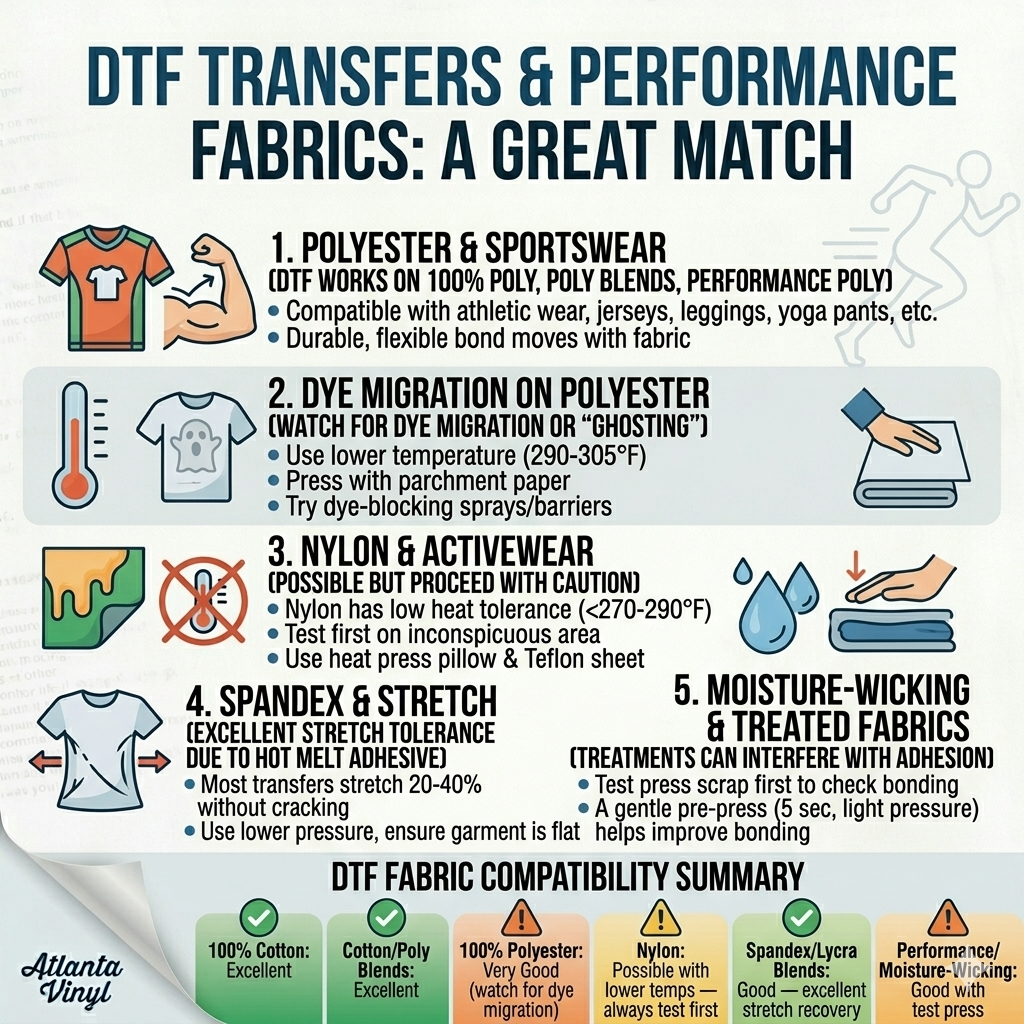
DTF Transfers and Performance Fabrics: A Great Match
One of the biggest advantages of DTF (Direct-to-Film) transfers is their versatility across fabric types. While cotton is often the go-to for custom apparel, a large portion of the market — athletic wear, activewear, sports uniforms, outdoor gear — is made from nylon, polyester, and performance blends. The good news is that DTF transfers work on most of these fabrics, though there are a few important considerations to keep in mind.
Does DTF Work on Polyester?
Yes — DTF transfers are highly compatible with polyester fabrics, including 100% polyester, polyester blends, and performance polyester. This is a major advantage over sublimation (which requires 100% polyester) and screen printing (which has limited stretch tolerance). DTF creates a durable, flexible bond that moves with the fabric, making it ideal for athletic jerseys, leggings, yoga pants, and sportswear.
One thing to watch out for with high-polyester fabrics is dye migration, also called "bleeding" or "ghosting." This occurs when the dye in a polyester garment migrates upward through heat and discolors the transfer. To minimize dye migration:
- Use a lower pressing temperature (around 290–305°F) and longer dwell time.
- Press with a piece of parchment paper between the platen and transfer.
- Use a dye-blocking spray or barrier before pressing.
- Choose low-bleed garments when possible.
Does DTF Work on Nylon?
Nylon is one of the more challenging fabrics for any heat transfer method due to its low heat tolerance. Most nylon fabrics cannot withstand temperatures above 270–290°F, which is below the typical DTF pressing temperature of 305–320°F. Pressing at too high a temperature can scorch, warp, or melt the nylon.
For nylon fabrics, proceed with caution:
- Test a small, inconspicuous area first at a lower temperature (270–285°F).
- Use a heat press pillow under the garment to compensate for thickness differences.
- Use a Teflon sheet to protect the fabric surface.
- Opt for a longer, lower-temperature press rather than a short, high-temperature one.
Ripstop nylon, nylon taslan, and other treated performance nylons may vary in heat tolerance, so always test before committing to a full run — or reach for a nylon-rated vinyl like Poli-Flex Nylon HTV as a proven alternative.
What About Spandex and Stretch Fabrics?
DTF transfers have excellent stretch tolerance due to the elastic properties of the hot melt adhesive. Most DTF transfers can stretch 20–40% without cracking, making them a solid choice for spandex, lycra, and four-way stretch fabrics. For maximum stretch performance, use slightly lower pressure during pressing and ensure the garment is laying flat — not stretched — on the platen when you press. If you're weighing vinyl for stretch gear instead, see our guide to the best HTV for athletic and sportswear apparel.
Moisture-Wicking and Treated Performance Fabrics
Some performance fabrics have special coatings or moisture-wicking treatments applied to them. These coatings can interfere with adhesion, causing DTF transfers to peel or not adhere properly. Always do a test press on a scrap piece of the same fabric before running a full production batch. If adhesion is an issue, a gentle pre-press (5 seconds, light pressure) to drive off moisture and "open" the fabric surface can help improve bonding.
Summary: DTF Fabric Compatibility
- 100% Cotton: Excellent
- Cotton/Poly Blends: Excellent
- 100% Polyester: Very good (watch for dye migration)
- Nylon: Possible with lower temps — always test first
- Spandex/Lycra Blends: Good — excellent stretch recovery
- Performance/Moisture-Wicking Fabrics: Good with test press recommended
DTF transfers are one of the most fabric-flexible decoration methods available. With the right settings and a test press, you can confidently decorate a wide range of performance and technical fabrics. Atlanta Vinyl's custom DTF transfers are produced to deliver consistent adhesion across fabric types — so you can expand your offerings beyond basic tees and into the full world of custom activewear. Ready to print? Build your next order on our DTF gang sheet builder.