
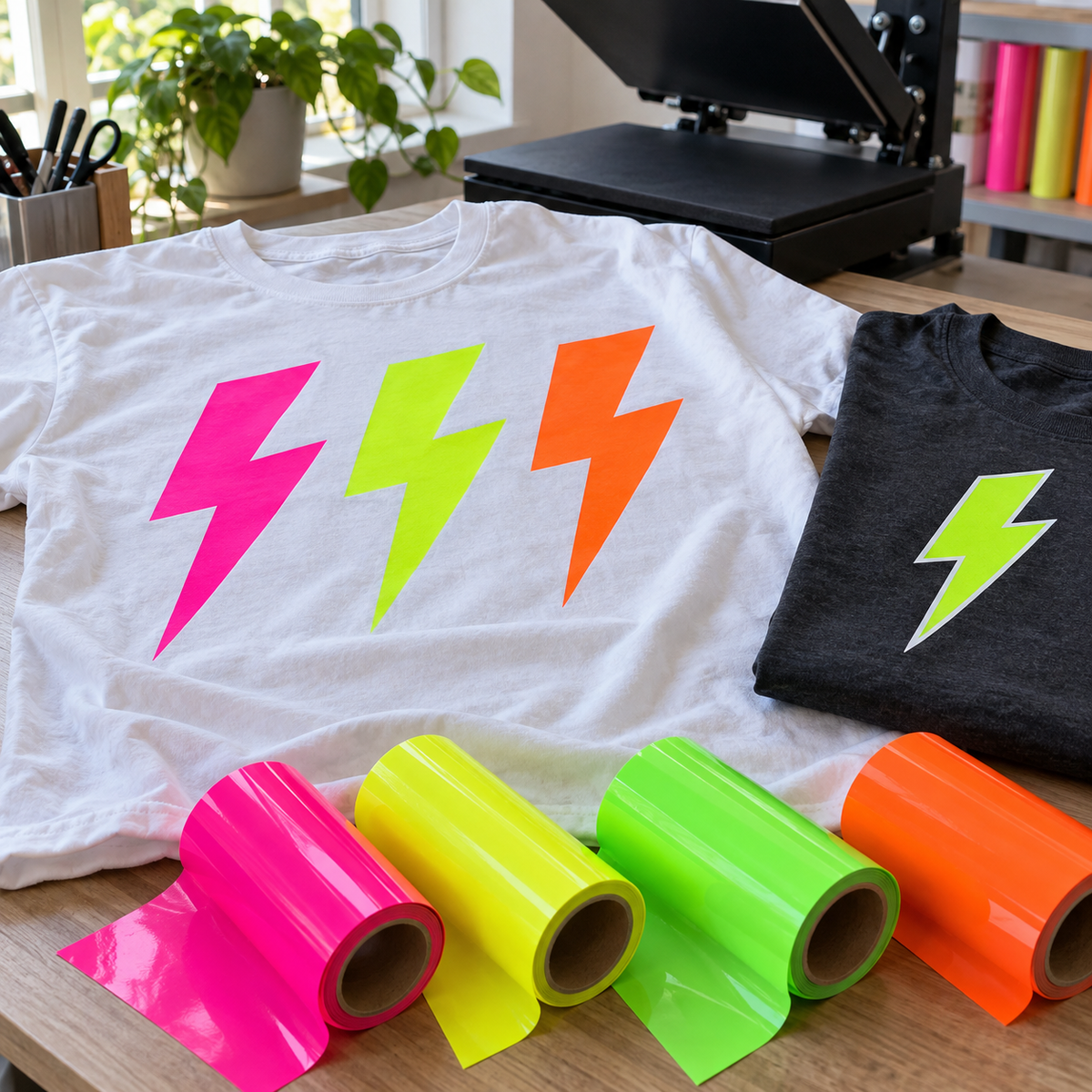
Nothing grabs attention like a neon design. Fluorescent heat transfer vinyl turns a plain shirt into something people notice from across a field, a race course, or a crowded event. But neon HTV behaves differently from standard colors: it is less opaque, it can look muted on dark fabric, and it fades faster in sunlight. Here is how to make fluorescent designs that pop and keep them bright for as long as possible.
What Makes Fluorescent Vinyl Different
Standard vinyl colors reflect light. Fluorescent pigments go a step further: they absorb some invisible ultraviolet light and re-emit it as visible color. That is why neon yellow, pink, orange, and green look almost electric in daylight, and why they glow so intensely under a blacklight.
That same chemistry explains the trade-offs. Fluorescent pigments are less opaque than standard pigments, and ultraviolet light from the sun breaks them down faster, so they fade sooner with heavy sun exposure. None of this makes neon HTV a bad choice. It means you get the best results when you plan for these traits.
Where Neon HTV Shines
Sports and Team Wear
Neon names, numbers, and accents stand out on jerseys, practice shirts, and fan gear. They are especially popular for youth sports, cheer, and booster club merchandise.
Events, Races, and Volunteers
Fun runs, festivals, school spirit days, and volunteer crews often want shirts that are easy to spot in a crowd. Fluorescent designs make staff and participants easy to find.
Glow and Blacklight Parties
Fluorescent vinyl reacts brightly under UV or blacklight, which makes it a natural fit for glow parties, neon-themed birthdays, dance events, and haunted attractions. Keep in mind that it does not glow in a dark room on its own. For a design that glows without a blacklight, look at glow-in-the-dark HTV instead.
Daytime Visibility, With a Caveat
Neon colors are eye-catching in daylight, so they are often used for visibility on outdoor gear. However, fluorescent vinyl is not a certified safety material, and it does not reflect headlights at night. If a project needs to be seen in low light, add a reflective material. Our guide on what reflective HTV is and where to use it explains the options, and any garment that must meet a workplace safety standard should be sourced and verified for that standard as a whole.
Opacity on Dark Garments
Because fluorescent colors are less opaque, they can look duller or slightly tinted when pressed directly onto black, navy, or other dark garments. The fabric color shows through the vinyl and mutes the neon.
On white, light gray, and pastel shirts, neon HTV usually looks vivid straight off the press. On dark shirts, you have a few options:
- Add a white underlayer. Cut the design twice, once in white and once in fluorescent, and layer the neon on top of the white. The white base blocks the dark fabric and lets the fluorescent color pop.
- Choose a lighter garment. If the design allows, a white, heather, or light-colored shirt shows neon colors at their best.
- Test before a full run. Press a sample on the exact garment color you plan to use and look at it in daylight.
For more about why some vinyl colors show the garment through them, read our article on demystifying opacity.
Layering Fluorescent EasyWeed
Siser EasyWeed Fluorescent HTV is built on the EasyWeed platform: it is thin, presses at a low temperature, can be peeled hot or cold, and is CPSIA certified. EasyWeed is designed to be layerable, with a one-second tack press that lets you set each layer in place before the final press.
To build a white underlayer:
- Cut the white base layer and the fluorescent top layer from the same design. Many crafters offset or slightly shrink the top layer, or add a thin outline, so registration does not have to be perfect.
- Tack the white layer for about a second, then peel the carrier.
- Place the fluorescent layer on top, cover with a PTFE sheet, and complete the full press using the manufacturer's settings.
- Keep the stack to as few layers as possible. Each layer adds thickness and stiffness.
Our step-by-step guide on how to layer heat transfer vinyl for multi-color designs walks through tack times, registration, and which materials can be layered.
Keeping Neon Designs Bright
Fluorescent colors fade faster in direct sunlight than standard colors. You cannot stop that entirely, but good habits slow it down:
- Store and dry out of direct sun. Avoid line-drying neon garments in bright sunlight for hours at a time.
- Wash inside out in cool or warm water with mild detergent. Skip bleach and fabric softener.
- Tumble dry low or hang dry indoors. High dryer heat is hard on any HTV.
- Do not iron directly on the design. If needed, iron inside out or use a cover sheet.
- Wait before the first wash. Give the adhesive time to set, following the timing on the product page.
For a full care routine you can share with customers, see our guide to aftercare for garments with heat transfer vinyl. If you sell neon items, it is worth telling customers that fluorescent colors naturally fade with heavy sun exposure, so they know what to expect.
Fluorescent Adhesive Vinyl for Signs and Decals
Neon is not just for apparel. Fluorescent adhesive vinyl, including ORACAL 6510, is a go-to for attention-grabbing signs, sale banners, window graphics, event signage, and labels. The same principles apply: it is bright and eye-catching, and fluorescent pigments fade faster in direct sun than standard colors, so it is often a better fit for short-term outdoor signage or indoor displays than for long-term outdoor use. Check the product page for durability details before quoting a sign job.
Neon HTV vs. Other Options
| Option | Best For | Things to Know |
|---|---|---|
| Fluorescent HTV | Bright solid-color names, numbers, and logos | Less opaque on dark shirts; layer over white |
| Glow-in-the-dark HTV | Designs that glow after the lights go out | Different effect than blacklight fluorescence |
| Reflective HTV | Visibility in headlights or low light | Reflects light rather than fluorescing |
| Neon DTF transfers | Multi-color designs with neon accents | Depends on the printer and ink setup |
If you are curious about printed neon, our post on whether you can print neon or fluorescent colors with DTF explains what is and is not possible.
Frequently Asked Questions
Does neon HTV glow under a blacklight?
Fluorescent HTV reacts brightly under UV or blacklight, which makes it popular for glow parties and neon-themed events. It does not glow in complete darkness on its own.
Why does my neon vinyl look dull on a black shirt?
Fluorescent vinyl is less opaque than standard colors, so dark fabric shows through. Layer the neon over a white base of a layerable vinyl like EasyWeed to restore brightness.
Does fluorescent vinyl fade?
Fluorescent pigments fade faster in direct sunlight than standard colors. Limit sun exposure, wash inside out, and dry on low or indoors to keep colors bright longer.
Is neon HTV good for safety vests?
It adds daytime visibility, but it is not a certified safety material. For low-light visibility, use reflective materials, and verify that the finished garment meets any required standard.
Make It Bright
Neon HTV is one of the easiest ways to make a design impossible to miss. Use it where visibility and energy matter, add a white underlayer on dark garments, and give customers simple care tips to keep the colors vivid. Atlanta Vinyl stocks Siser EasyWeed Fluorescent HTV, fluorescent adhesive vinyl, and everything you need to press, layer, and finish your brightest projects.