
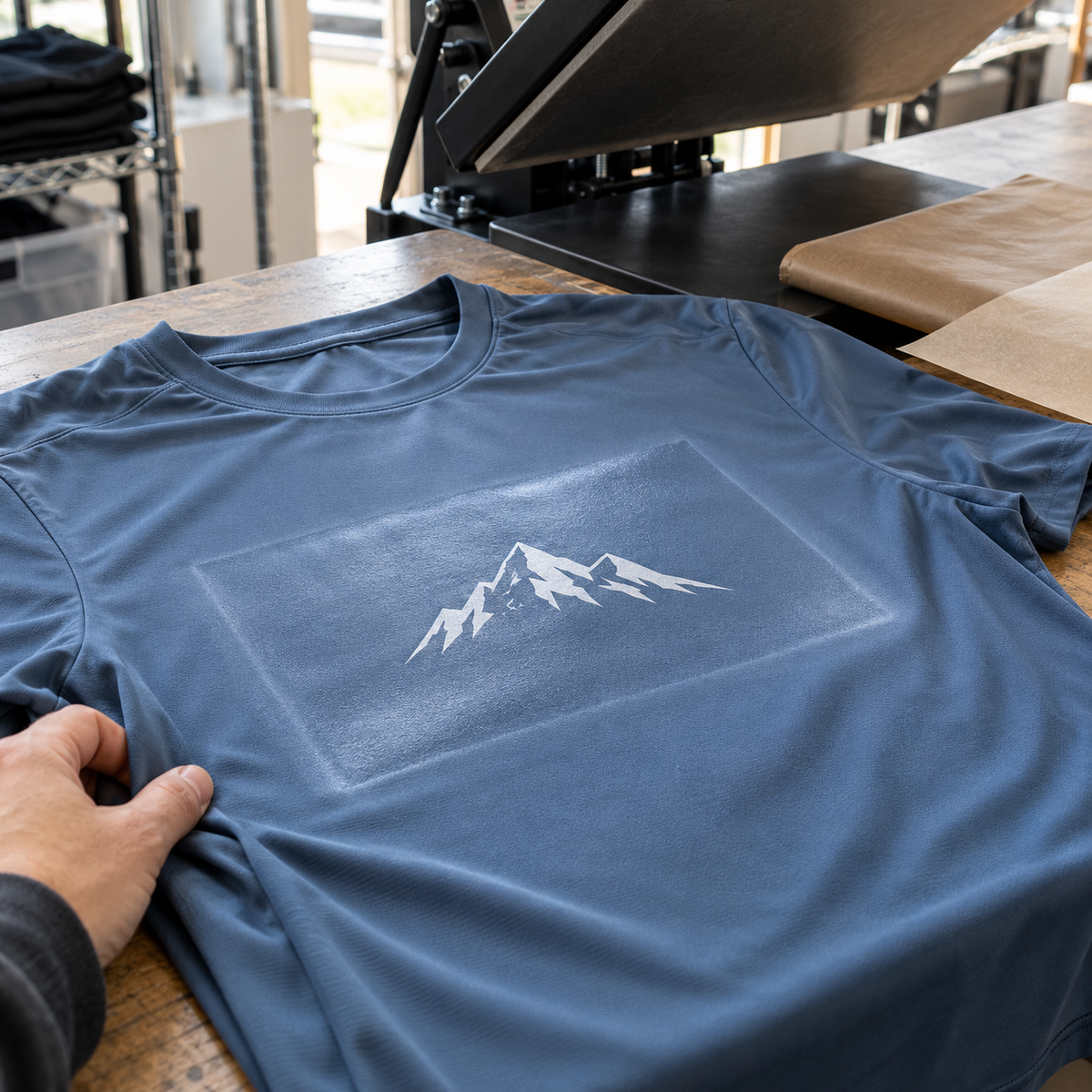
You peel the carrier, the design looks perfect, and then you notice it: a shiny rectangle the exact size of your heat platen, or a faint brown scorch near the hem. Heat press marks on polyester are one of the most common complaints from new and experienced decorators alike, and they are almost always preventable. This guide explains why scorch marks on shirts happen, how to stop them before they start, and what you can try if you are already looking at a marked garment.
What Heat Press Marks Actually Are
Not every mark is the same problem, and the fix depends on which one you have. Decorators usually run into three types:
- Shiny press boxes (glazing): A glossy outline or patch where the platen touched the fabric. Polyester is a thermoplastic fiber, which means it softens with heat. Under pressure, the surface fibers flatten and reflect light differently than the untouched fabric around them.
- Platen edge lines: A crisp line marking where the edge of the upper platen pressed into the garment. These are caused by the step in thickness between the pressed area and the rest of the shirt, often made worse by seams, collars, or a thick garment.
- Scorch or discoloration: A yellow, brown, or darkened area. On polyester this can come from excessive heat, but it is also frequently a dye reaction, where the fabric's dyes shift color or move when they get hot.
Shine and edge lines are mostly mechanical and often relax over time. True scorching changes the fiber or dye and is much harder to reverse, which is why prevention matters so much.
The Main Causes of Scorch Marks on Shirts
Too Much Heat
Many standard heat transfer vinyls are designed to press at temperatures that are perfectly fine for cotton but push the limits of thin or performance polyester. Once the fabric approaches its softening point, it glazes quickly.
Too Much Pressure
Heavy pressure crushes the fibers and drives the platen edge deeper into the fabric. If you routinely crank pressure to compensate for a cold platen or a thick seam, you are trading one problem for another.
Too Much Time
Dwell time is cumulative. A long pre-press, a long main press, and a second finishing press can add up to far more heat exposure than the polyester needs. Every extra second gives the fibers more time to flatten and the dyes more time to react.
Dye Reactions and Synthetic Fibers
Dyed polyester, and especially sublimated polyester, can release dye as gas when heated. That is the same mechanism behind dye migration, where color bleeds up into light-colored vinyl. Even without vinyl on top, heat can shift the shade of the fabric where the platen touched it, creating a visible box. Coatings and finishes on performance fabrics can also react to heat and leave a mark.
How to Prevent Heat Press Marks on Polyester
Choose a Low-Temperature Material
The single most effective change is to use a transfer material that does not need much heat. For printed designs, Siser Hi-5 Print Matte printable HTV was made for heat-sensitive fabrics. It applies at 250°F for just 5 seconds and is designed to eliminate heat marks on materials like 100% polyester, rayon, polypropylene, and performance fabrics. Keep in mind that it is a print-and-cut film for eco-solvent, solvent, or latex printers, not a home inkjet product.
For solid-color cut designs, look for HTV with a low application temperature and follow the press settings on its product page. If the shirt is sublimated or heavily dyed, a low-temperature blocker material such as POLI-FLEX Blockout Soft is worth considering because it addresses heat sensitivity and dye bleed at the same time. You can compare options in our heat transfer vinyl collection.
Use a Press Pillow or Foam Pad
A press pillow sits inside the garment under the print area. It raises the decoration zone above surrounding seams and lets the edges of the platen land on a soft, sloping surface instead of a hard step. The result is far less edge marking. If you have not used one before, our guide on what press pillows and PTFE sheets are and when to use them covers the basics, and our walkthrough on using a heat press pillow for zippers, buttons, and seams shows how to handle bulky areas.
Always Use a Cover Sheet
A PTFE (Teflon-style) sheet, kraft paper, or parchment between the platen and the garment softens the contact and reduces glazing. It also protects the platen from adhesive and keeps any released dye off your press. Some decorators fold the cover sheet so it extends past the edges of the platen to diffuse those hard lines even further.
Shorten the Dwell Time and Lighten the Pressure
Use the shortest time and lightest pressure that gives a solid bond for your material. Start with the manufacturer's recommended settings, then make adjustments in small steps on a test garment. Do not simply guess lower settings for a standard vinyl, though. Pressing below what a material needs can cause lifting and peeling, which our post on why transfers crack or peel explains. If marks show up in the same spot on every shirt, check your press for hot spots and cold spots.
Keep the Pre-Press Brief
A pre-press removes moisture and wrinkles, but polyester holds little moisture to begin with. A very short pre-press, often just a couple of seconds, is usually enough. Many printable Siser films call for a 2 to 3 second garment preheat, which is a good reference point.
Quick Reference: Cause and Prevention
| Problem | Likely Cause | Prevention |
|---|---|---|
| Shiny box around design | Heat and pressure flattening fibers | Lower-temp material, lighter pressure, cover sheet |
| Sharp line at platen edge | Hard step from platen or seams | Press pillow or foam pad, fold cover sheet past edges |
| Yellow or brown discoloration | Excess heat or dye reaction | Lower temperature, shorter dwell, test the blank first |
| Marks in the same spot every time | Hot spot or uneven platen | Check press temperature and pressure evenness |
How to Remove Heat Press Marks After Pressing
If a mark has already appeared, there are a few gentle remedies that decorators commonly try. None of them is guaranteed, results vary by fabric and dye, and some marks are permanent. Always try any remedy on a scrap or a hidden area of the same garment first, and avoid putting heat or moisture directly on the vinyl itself.
- Light steam: Hold a garment steamer or a steam iron slightly above the fabric (not touching it) and let the steam relax the flattened fibers around the design.
- Washing: Many shiny press boxes fade or disappear after the first wash, as the fibers relax and regain texture. Wait the curing time recommended for your transfer before washing, then follow normal care: inside out, cool or warm water, and low dryer heat or hang to dry.
- Vinegar and water mist: Some decorators lightly mist the marked area with a diluted white vinegar and water solution, then allow it to air dry or follow with light steam. Test this on a scrap first, since it may affect certain dyes or finishes.
True scorching, where the fiber has melted or the dye has changed color, usually cannot be reversed. In those cases, the best outcome is learning what caused it so the next shirt comes out clean. For more about proper post-press care, see our guide to aftercare for garments with heat transfer vinyl.
Frequently Asked Questions
Why does my heat press leave a square on polyester shirts?
Polyester softens with heat, and the platen's pressure flattens the surface fibers into a shiny box. Using a lower-temperature material, lighter pressure, a cover sheet, and a press pillow reduces or eliminates the outline.
Do heat press marks wash out?
Shiny press boxes and edge lines often fade after one or two washes as the fibers relax. Scorching that has changed the color of the fabric usually does not wash out.
What temperature should I use on polyester?
Use the lowest temperature your transfer material is rated for, and always follow the manufacturer's instructions on the product page. Materials made for heat-sensitive fabrics, such as Hi-5 Print Matte at 250°F for 5 seconds, give you the most room for error.
Press Cleaner, Sell More
Heat press marks on polyester come down to too much heat, pressure, or time, combined with fibers and dyes that react to all three. Choose materials made for heat-sensitive fabrics, keep pillows and cover sheets within reach, and test on a scrap before every new blank. Atlanta Vinyl carries low-temperature HTV, printable films, presses, and accessories to help you get clean results on every polyester order.