
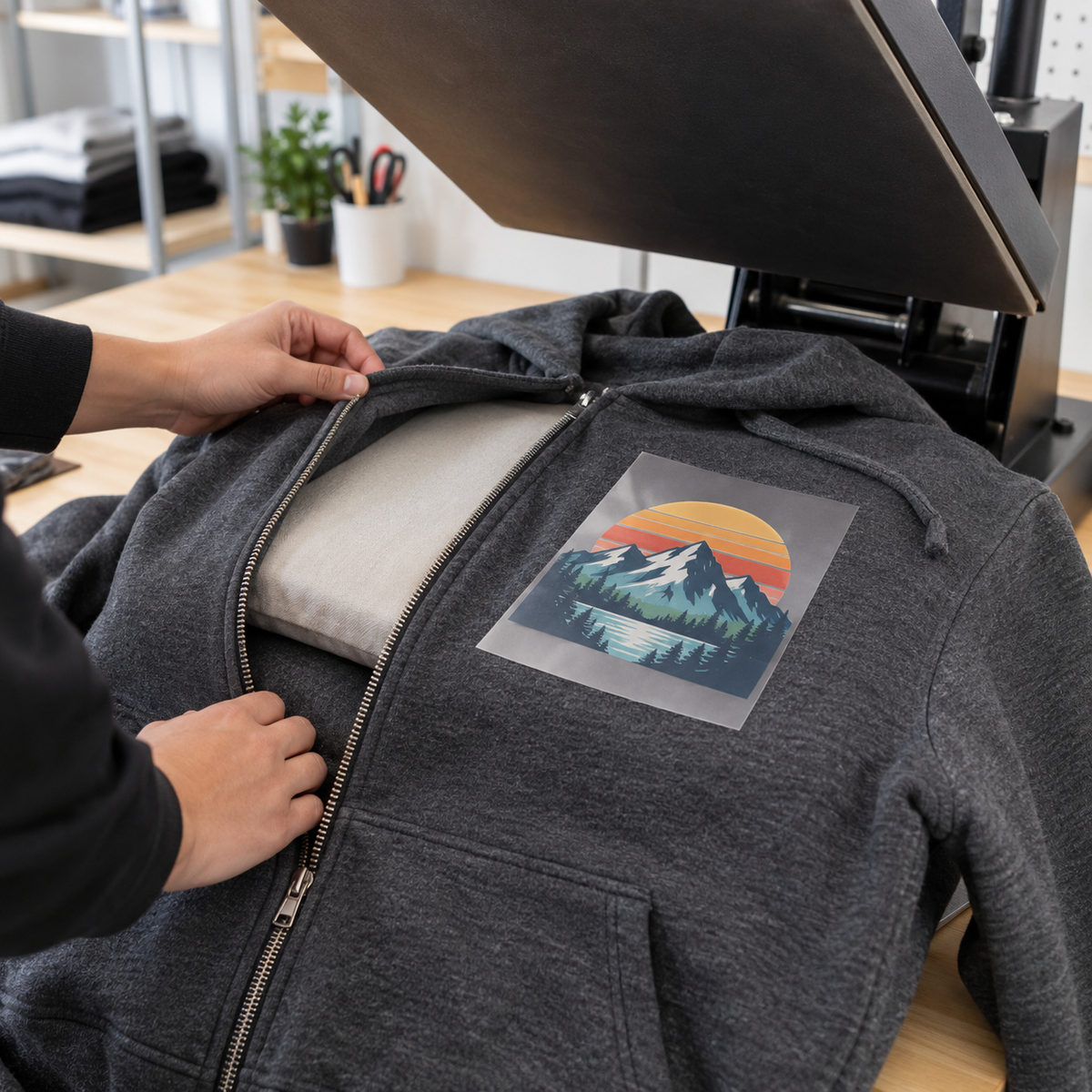
The Problem with Zippers, Buttons, and Seams
One of the most common challenges in heat pressing is dealing with garments that have raised hardware, thick seams, or multiple fabric layers that prevent the heat press platen from sitting flat and applying even pressure. Zippers on hoodies and jackets, buttons on polo shirts, snaps on baby onesies, and even thick double-needle seams can all cause the same problem: uneven pressure that leads to incomplete transfer adhesion, visible pressure marks, or worst of all — a broken or damaged zipper or button from direct contact with the hot platen.
The solution is a heat press pillow. Here's everything you need to know about using one.
What Is a Heat Press Pillow?
A heat press pillow (also called a pressing pillow or heat press pad) is a foam- or fiber-filled pad wrapped in a heat-resistant material. You place it inside the garment between the layers of fabric before pressing. The pillow compresses under the heat press platen, filling in the space around zippers, buttons, seams, and other raised elements, so the flat surface contacts the garment evenly from edge to edge of the design area.
Heat press pillows come in a variety of sizes (most commonly 6"x8", 8"x10", and 12"x14") and in flat or contoured shapes for different garment types.
When Do You Need a Heat Press Pillow?
- Hoodies and zip-up jackets: The zipper creates a ridge that prevents the platen from sitting flat. A pillow inside the garment levels the surface — especially important when applying DTF transfers to hoodies.
- Polo shirts and button-down collars: Buttons near the chest area or collar area create pressure points. Use a pillow to distribute pressure evenly.
- Baby onesies and bodysuits: Snap closures at the bottom of onesies can cause the garment to tilt on the lower platen. Slip a small pillow inside to compensate.
- Jeans and denim with metal rivets: Pocket rivets and waistband hardware can leave imprints on your transfer if they contact the platen. A pillow lifts the design area away from the hardware — handy if you're pressing DTF transfers on denim.
- Pressing near side seams: When your design extends close to a side seam, the thickness of the seam causes the fabric to tilt slightly. A pillow under that area corrects for this.
- Bags and totes with handles or straps: Hardware and attachment points cause similar leveling issues. Use a pillow inside the bag for a flat pressing surface.
How to Use a Heat Press Pillow: Step by Step
- Choose the right pillow size: The pillow should comfortably fit inside the garment in the area you're pressing. It doesn't need to cover the entire garment, just the section beneath your design.
- Insert the pillow: Slip the pillow inside the garment (inside the hoodie, inside the shirt body, inside the bag pocket). Position it so it fills the area directly beneath where your design will be, with the zipper, button, or seam resting in the pillow material rather than on the hard table surface.
- Position your garment on the lower platen: Lay the garment flat with the pillow inside. The pillow raises the garment surface to be more level with any hardware or seams. The goal is that when you press, the platen contacts the entire design area evenly.
- Apply your transfer and press normally: Follow your standard press settings for the decoration type you're using — whether that's heat transfer vinyl or a DTF transfer. The pillow absorbs the extra height difference and distributes pressure across the full design area.
- Peel and inspect: Check the edges of your transfer after pressing to ensure full adhesion across the entire design, particularly in areas that were near the zipper or seam.
Types of Heat Press Pillows
- Silicone foam pillows: The most popular type. Dense silicone foam that compresses under pressure and returns to shape. Heat-safe and durable for high-volume use.
- Fiber-filled pillows: Softer fill material that conforms well to irregular surfaces. Good for lower-volume use.
- Layered foam/silicon pads: Multi-layer construction for extra compression and surface leveling.
- Contoured sleeve pillows: Shaped specifically for pressing sleeves, allowing you to isolate one layer of the sleeve fabric without pressing through to the other side.
Pro Tips for Pressing with Pillows
- Always do a test press when using a pillow for the first time on a new garment type to verify your transfer adheres correctly across the full design area.
- Adjust your press pressure slightly when using a pillow — the pillow adds height, which may require a slight pressure adjustment.
- Multiple pillows can be stacked for items with especially tall hardware or thick seams.
- Keep pillows clean — residue from transfers or parchment paper can accumulate on pillow surfaces over time. Wipe them down regularly.
Shop Heat Press Supplies at Atlanta Vinyl
Atlanta Vinyl carries heat press pillows and accessories to help you get professional results on every garment, regardless of zippers, buttons, or seams. Browse our heat press supplies alongside our full selection of custom DTF transfers, HTV, and heat press machines.