
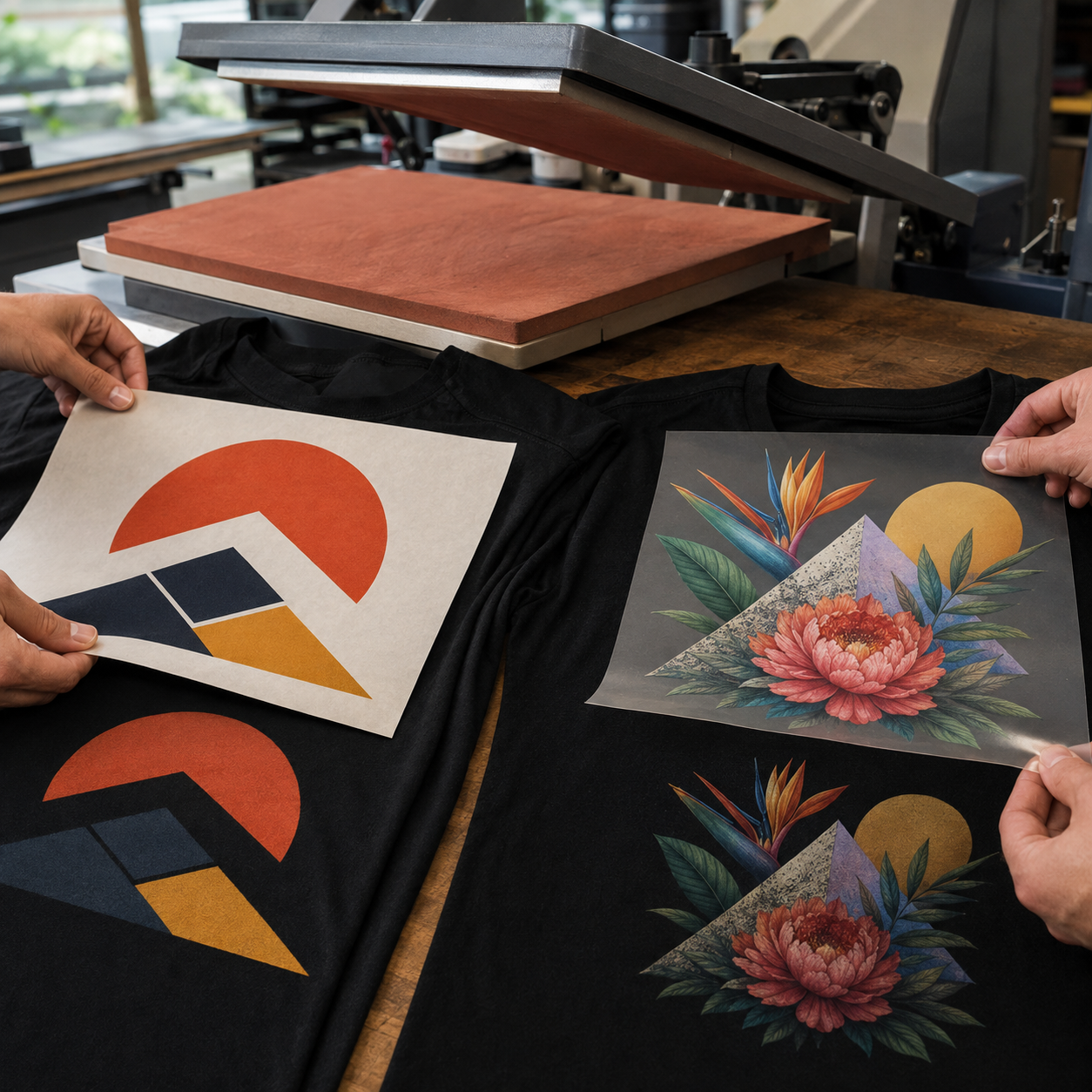
Two Popular Transfer Methods — But Very Different
Screen-print transfers and DTF (Direct-to-Film) transfers are both popular ways to decorate apparel using heat and pressure — but they're made using completely different processes and have different strengths and limitations. Understanding the difference helps you choose the right method for your specific project, budget, and quality goals.
What Is a Screen-Print Transfer?
A screen-print transfer is a pre-printed plastisol ink design on a special release paper. The design is printed using traditional screen-printing equipment — each color is pushed through a separate screen using plastisol ink, building up layers of ink on the paper. The result is a thick, vibrant, durable print that can be heat-transferred to a garment using a heat press.
Screen-print transfers are stored until needed, then applied to the final garment on demand. This "print now, press later" approach allows decorators to order large quantities of transfers and fulfill individual orders quickly without keeping a large inventory of finished garments.
What Is a DTF Transfer?
DTF (Direct-to-Film) transfers are printed directly onto a special PET film using water-based inks, then coated with a hot-melt adhesive powder that is cured in a heat tunnel. The result is a full-color design on a flexible film that can be applied to virtually any fabric using a heat press.
DTF transfers are typically printed digitally from a CMYK print file, meaning they can reproduce unlimited colors, photographic images, gradients, and fine details without additional setup costs per color.
Key Differences: Screen-Print Transfers vs. DTF Transfers
- Color limitations: Screen-print transfers require a separate screen for each color in a design. More colors = more cost and setup. DTF transfers are fully digital and can reproduce unlimited colors and gradients at no extra cost.
- Ink type and feel: Screen-print transfers use plastisol ink, which produces a slightly raised, rubbery feel. DTF transfers use water-based inks with an adhesive layer, producing a softer, more flexible feel that integrates better with the fabric.
- Durability: Both are durable when applied correctly. Plastisol-based screen prints are known for exceptional color brightness and longevity. DTF transfers have improved dramatically in durability and are highly wash-resistant when pressed at the correct temperature and pressure.
- Minimum orders: Screen-print transfers typically require minimum orders of 12–24 pieces per design to offset screen setup costs, making them best for larger runs. DTF transfers can be ordered in very small quantities — even a single custom DTF transfer sized to your design — making them ideal for custom one-off orders.
- Detail and photographic images: DTF excels at fine details, gradients, and photographic artwork. Screen-print transfers are better suited to simple, bold, flat-color designs.
- Cost structure: Screen-print transfers have higher upfront costs for small runs but become cost-effective at high volumes. DTF transfers are more cost-effective for small quantities and one-of-a-kind orders.
- Compatible fabrics: Both work on cotton and cotton blends. DTF has broader fabric compatibility, working on nylon, polyester, and many synthetic blends.
When to Choose Screen-Print Transfers
Screen-print transfers shine for large production runs of simple, bold designs — think team sports uniforms, branded merchandise at volume, or event apparel with a defined quantity. If you're ordering 50+ of the same design and it's 3 colors or fewer, screen-print transfers often deliver the best cost-per-unit and the most vibrant, durable print.
When to Choose DTF Transfers
DTF transfers are the go-to for small quantities, complex artwork, photographic designs, and situations where you need maximum flexibility. Individual custom orders, on-demand fulfillment, and designs with gradients or fine details all favor DTF. DTF is also excellent for fabric types that screen-print doesn't handle as well, like performance wear and polyester.
Which Does Atlanta Vinyl Offer?
Atlanta Vinyl carries both DTF transfers and screen-print transfers, including specialty options like puff screen-print transfers. Whether you need high-volume screen printing or flexible on-demand DTF gang sheets, we have the right transfer for your project. Check our screen-print transfers and contact us if you need help choosing the right method for your next order.