
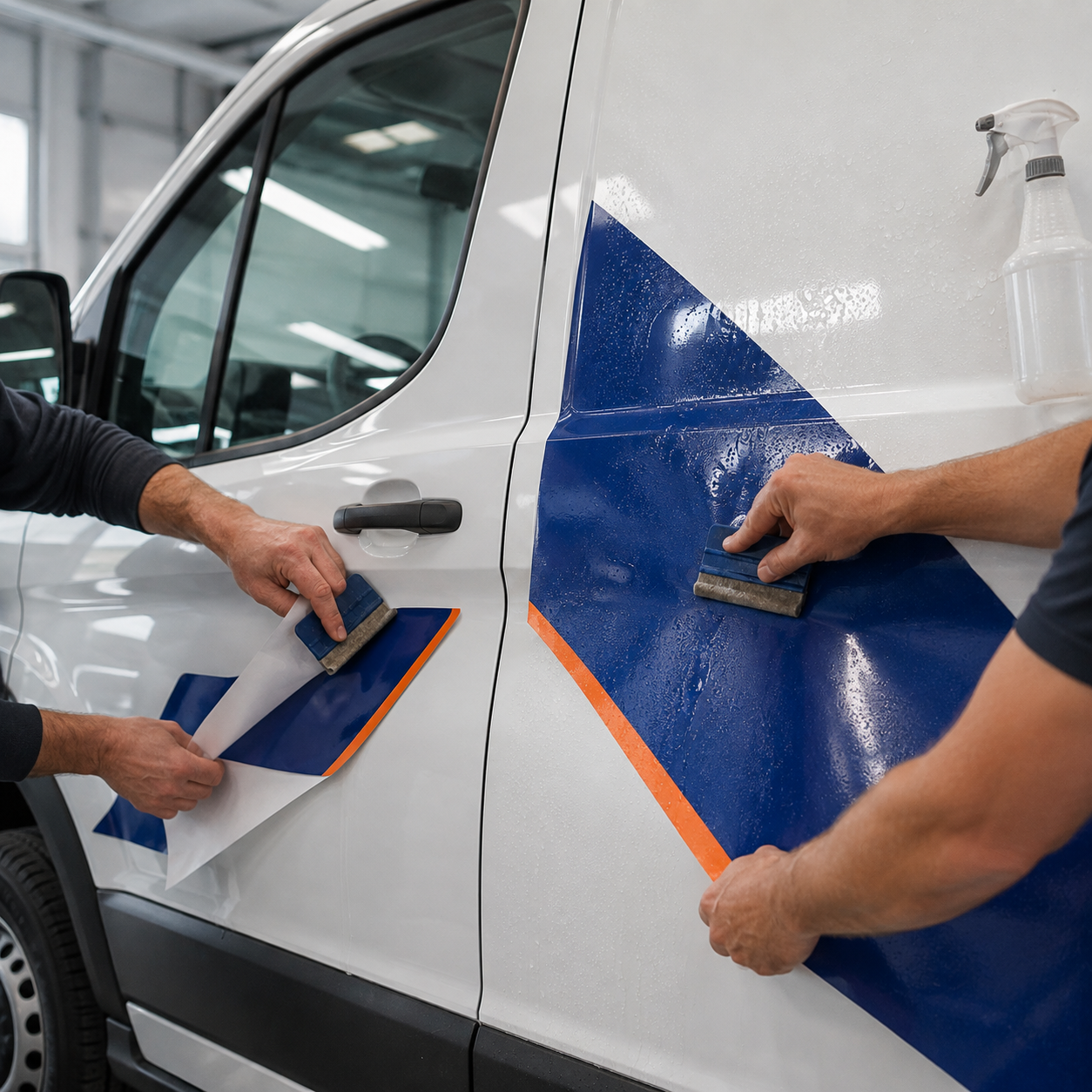
Two Methods, One Goal
When it comes to applying adhesive vinyl, there are two main methods: dry application and wet application. Both can produce great results, but they work better in different situations. Knowing which method to use — and when — can mean the difference between a perfectly smooth application and a frustrating redo.
The Dry Method: Fast and Simple
The dry method is exactly what it sounds like: you apply the vinyl directly to a clean, dry surface without any liquid. It's the most common method and works great for most everyday vinyl applications.
How It Works
Clean the surface with isopropyl alcohol and let it dry completely. Position the vinyl where you want it, then peel the backing and apply starting from one edge, using a squeegee to press and smooth as you go. Work slowly and deliberately from one side to the other, keeping the vinyl taut to avoid wrinkles.
Pros of the Dry Method
- Faster process: No mixing or spraying required — just clean, peel, and apply.
- Immediate bond: The vinyl bonds to the surface on contact, so there's no waiting for moisture to evaporate.
- Better for porous surfaces: Wet application can cause adhesion issues on slightly porous surfaces; the dry method avoids this.
- Better for small designs: Small decals and lettering are easier to control with the dry method.
Cons of the Dry Method
- No repositioning: Once the vinyl touches the surface, it bonds. Mistakes are harder to fix.
- More bubbles on large pieces: Large, flat decals can trap air more easily without the slip of wet application.
- Not ideal for large curved surfaces: The vinyl can land unevenly on dramatic curves without the slip factor.
The Wet Method: Control on Larger Applications
The wet method involves misting the surface (and sometimes the vinyl) with a soapy water solution before applying the vinyl. This gives you precious extra seconds to reposition and adjust before the bond fully sets.
How to Make the Solution
Mix a few drops of dish soap into a spray bottle filled with water. Shake gently. Too much soap can prevent the vinyl from bonding; a light mist is all you need.
How It Works
Clean the surface thoroughly, then mist the surface lightly with the soapy water. Peel the backing from the vinyl and apply the vinyl to the wet surface. Slide and reposition as needed. Once you're happy with the position, use a squeegee to firmly press the vinyl from the center outward, pushing out water as you go. Let the vinyl cure fully before peeling the transfer tape — this may take longer than the dry method as moisture needs to evaporate.
Pros of the Wet Method
- Repositionable: The soapy water lets you slide and adjust the vinyl after it's placed — a huge advantage on large designs.
- Fewer large bubbles: The water acts as a lubricant, allowing bubbles to push out more easily.
- Better for large, flat surfaces: Large signs, window graphics, and wall decals benefit greatly from the wet method.
- Great for curved surfaces: The slip helps you apply vinyl to curved surfaces without it bonding prematurely in the wrong position.
Cons of the Wet Method
- Longer setup and cure time: You need to wait for moisture to fully evaporate before peeling transfer tape — sometimes 24+ hours for large applications.
- Not for all surfaces: Porous surfaces like unsealed wood can absorb moisture and cause adhesion issues.
- Soap residue risks: Too much soap can leave residue that interferes with the adhesive bond.
Which Method Should You Choose?
Use the dry method for: small decals, lettering, patches, porous surfaces, situations where you need immediate adhesion, and any project where repositioning isn't needed.
Use the wet method for: large window graphics, large wall decals, curved surfaces like tumblers and signage, any project where you need extra time to position, and applications where air bubbles are a major concern.
Practice Makes Perfect
Both methods take a little practice to master. If you're new to applying adhesive vinyl, try both on scrap pieces to get a feel for how each method behaves before tackling your main project. Atlanta Vinyl carries high-quality adhesive vinyl, including Oracal 651 permanent vinyl, that works beautifully with both dry and wet application methods — find the right vinyl for your next project in our online store.