
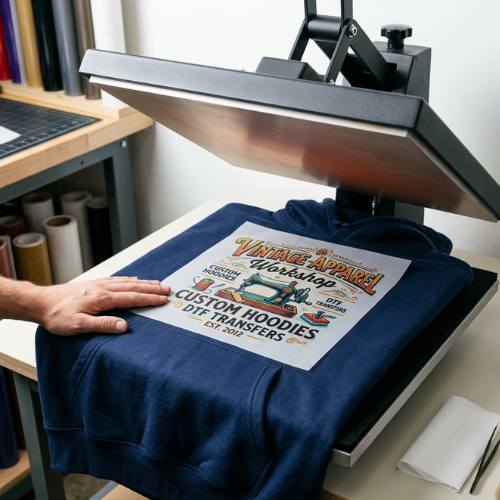
Why Hoodies Are Tricky to Press
Hoodies are one of the most popular items for custom apparel — but they're also one of the most challenging to press. Between the thick seams, front pocket, hood bulk, and layered fabric, a standard flat press can leave you with uneven results, scorched fabric, or transfers that won't stick properly. With the right techniques, though, you can get a clean, professional result every time.
Choosing the Right Placement for Hoodie DTF Transfers
Placement is everything when it comes to hoodies — our sizing and placement guidance covers the fundamentals. Here are the most common design locations and what you need to know about each:
- Front chest (above the pocket): The standard placement. Center your design 3-4 inches below the collar. This area is relatively flat and easy to press.
- Full front (covering the pocket area): This is where most issues arise. The kangaroo pocket creates a raised ridge that can cause uneven pressure. More on this below.
- Back: The back of a hoodie is usually the easiest area to press - just watch for the hood hanging over the top.
- Sleeve: Sleeve prints require a sleeve platen or a creative folding technique to isolate the fabric.
- Left chest: A small logo placement. Position about 4 inches down from the shoulder seam and 4 inches from the center.
The Kangaroo Pocket Problem
The front kangaroo pocket on hoodies is the biggest obstacle when applying DTF transfers. The seam that attaches the pocket to the garment creates a raised ridge that causes uneven pressure under the heat press platen. If your design crosses over this seam, part of your transfer may not adhere properly, resulting in peeling edges or a blurry print.
Here is how to handle it:
- Use a heat press pillow: A silicone heat press pillow or foam pad placed inside the garment helps compensate for the uneven surface caused by the pocket seam.
- Stuff the pocket: Insert a thick piece of cardboard or a folded PTFE sheet inside the pocket to bring it flush with the rest of the garment before pressing.
- Design around the pocket: If possible, place your design above the pocket entirely to avoid the seam altogether.
Recommended Press Settings for Hoodies
Hoodies are typically made from a cotton/polyester blend or 100% cotton. General guidelines are:
- Temperature: 305-315 degrees F
- Time: 10-15 seconds
- Pressure: Medium to firm
- Peel: Warm or cold peel, depending on the transfer type
The thick fabric of a hoodie retains heat differently than a standard t-shirt, so you may need to add 1-2 seconds to your press time compared to a thinner garment — our press settings cheat sheet for DTF and sublimation transfers is a handy reference.
Pressure Tips for Even Application
Uneven pressure is the number one culprit behind DTF transfers that lift or peel at the edges. To ensure even pressure on a hoodie:
- Flatten the garment as much as possible before pressing.
- Use a heat press pillow inside the garment to level out the surface.
- Avoid pressing directly over thick seams or zipper areas without a pillow.
- Make sure your heat press platen is calibrated for even pressure.
Dealing with Hood Bulk
The hood itself adds bulk behind the collar that can tilt the garment on the press. Tuck the hood behind the garment or fold it neatly to one side before pressing to keep the garment lying flat on the lower platen.
Pro Tips for Perfect Hoodie Transfers
- Do a test press on a similar blank or scrap fabric before committing to the full design.
- Pre-press the garment for 3-5 seconds to remove moisture and wrinkles.
- Let the garment cool completely before handling the transfer.
- Always use a PTFE sheet or parchment paper as a cover sheet to protect the transfer and platen.
Custom DTF transfer gang sheets from Atlanta Vinyl are designed to adhere to a wide range of fabrics, including the cotton/poly blends used in most hoodies. Browse our custom DTF transfers, stock up on heat press pillows and PTFE sheets, and get everything you need to deliver professional results on every hoodie order.