
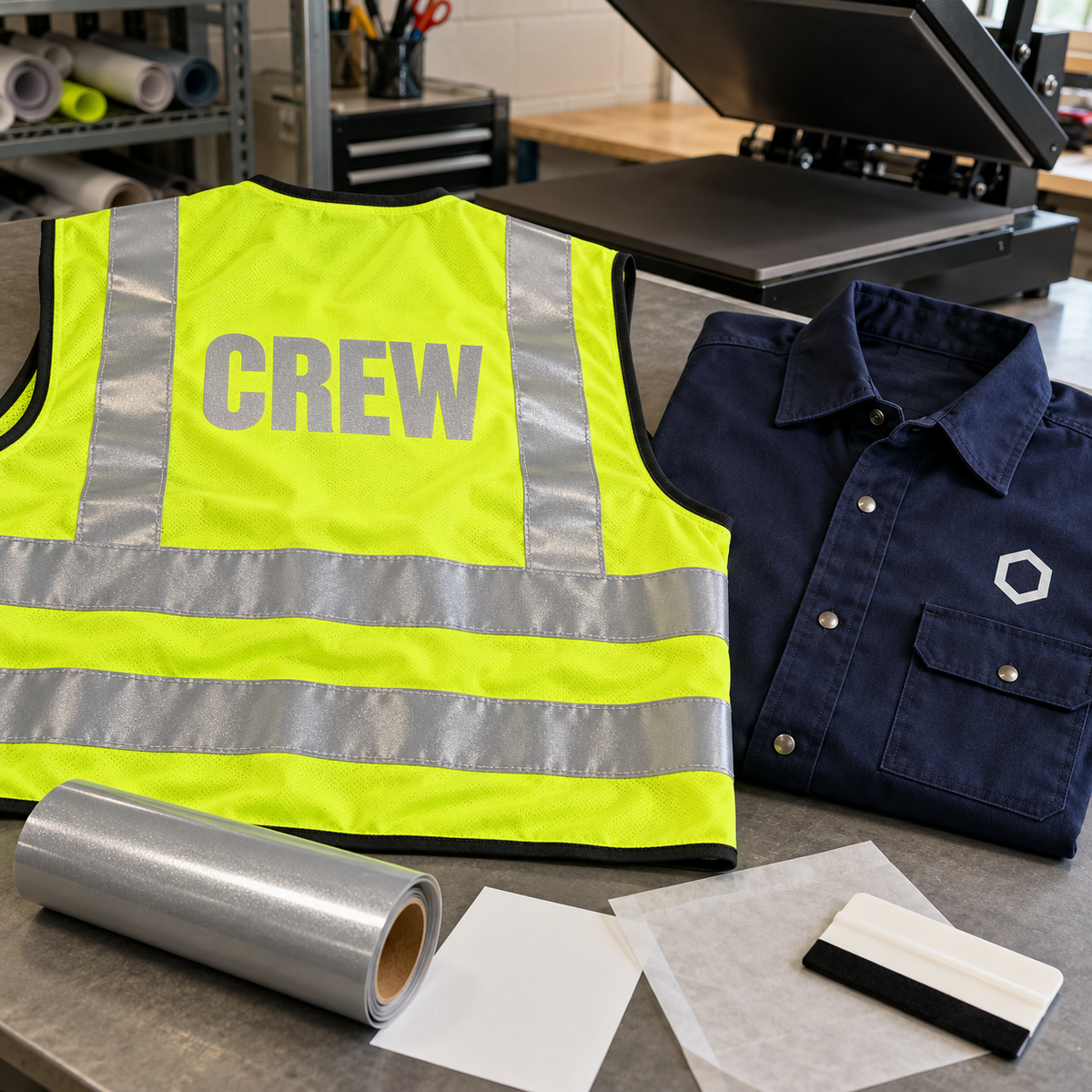
Crews, contractors, and safety managers often want their company name on hi-vis vests, coveralls, and jackets, and they want it done in a way that does not compromise the gear. Reflective HTV for safety vests and flame retardant heat transfer vinyl make that possible, but workwear decoration comes with more responsibility than a fashion tee. This guide covers how to choose materials, where to place them, how to care for them, and what to confirm before you hand a finished garment to a customer.
Start With Compliance: What Decorating Can and Cannot Do
Before anything else, set expectations with your customer. Applying a reflective or flame-retardant transfer does not certify a garment. Some materials carry their own test results, but standards for high-visibility and flame-resistant clothing apply to the finished garment as a whole: the base fabric, the trims, the construction, and any decoration added to it.
- Ask the customer which standard, if any, the garment must meet for their job site or employer.
- Have the buyer confirm with the garment manufacturer and their safety officer that the finished, decorated garment still meets that requirement.
- Check whether the garment maker has guidance on adding logos or heat-applied decoration, since some do.
- Do not describe a decorated garment as compliant or certified. That determination belongs to the buyer and the applicable standard, not to the decorator.
Handling this up front protects your customer and your business, and it makes the rest of the job easier.
Reflective HTV Options for Workwear
If you need a refresher on how retro-reflective vinyl works, our post on what reflective HTV is and where to use it covers the basics. Here we focus on picking a film for work and safety apparel.
POLI-FLEX Reflex
POLI-FLEX Reflex HTV uses retro-reflective metalized glass beads, and its reflectivity is certified to EN ISO 20471:2013. It is designed for work and safety clothing, kids' wear, and bags, and it applies to cotton, uncoated nylon, poly/cotton, and poly/acrylic fabrics. For workwear lettering where reflectivity performance matters, this is the most documented option in our lineup. Remember that a certified material is not the same as a certified garment.
Siser EasyReflective
Siser EasyReflective also uses a glass-bead construction. It has a pressure-sensitive (sticky) carrier that holds designs in place, a low application temperature, and a warm peel. Color options include Aqua, Dark Gray, and Rainbow Black, which makes it a good choice for branded logos and reflective accents where you want something other than silver.
Stahls' Reflective Films
Stahls' offers Reflect Pro and Reflective II, plus a dedicated Stahls' reflective safety HTV collection. Check each product page for fabric compatibility and press settings, as they differ by film.
Flame Retardant HTV for FR Garments
Flame-resistant garments are a different situation. Pressing a standard PVC or PU vinyl onto an FR shirt adds material that was not designed for that use, which is why FR-specific decoration exists.
POLI-FLEX Flame Retardant HTV is a flame-retardant PU film that complies with DIN EN ISO 4589-2. It is made for workwear, racing suits, firefighter gear, and safety apparel, has a matte finish, and applies to cotton, polyester, and blends. The most common pick is 401FR White POLI-FLEX Flame Retardant HTV for names, numbers, and company logos.
The same rule applies here, and it matters even more: the FR film meets its listed test, but the buyer must confirm that the finished garment meets whatever standard their job requires. Keep decoration small and purposeful, avoid covering seams and closures, and do not layer standard vinyl on top of FR film.
Choosing the Right Material
| Need | Material to consider | Why |
|---|---|---|
| Reflective lettering on work and safety clothing | POLI-FLEX Reflex | Metalized glass beads; reflectivity certified to EN ISO 20471:2013 |
| Colored reflective logos and accents | Siser EasyReflective | Glass-bead film in colors like Aqua, Dark Gray, Rainbow Black; low temp, warm peel |
| Decoration on flame-resistant garments | POLI-FLEX Flame Retardant (401FR) | Flame-retardant PU that complies with DIN EN ISO 4589-2; matte |
| Stahls'-based shop workflows | Stahls' Reflect Pro, Reflective II | Reflective films within the Stahls' lineup |
Common Workwear Use Cases
- Company names on hi-vis vests: Many crews want a company name across the back. Place it in an open area of background fabric so you are not covering the garment's existing reflective tape.
- Crew identification: Reflective names or roles (Supervisor, Flagger, Medic) on jackets help people find each other on busy sites.
- Night running and cycling clubs: Reflective logos on tees and jackets add visibility for group events, though they are a supplement to proper safety gear rather than a substitute.
- FR shirts and coveralls: Utility, electrical, and industrial customers often need small chest logos and name tags on FR garments using FR-specific film.
- Kids' wear and bags: Reflective accents on backpacks and outerwear add visibility during darker months.
Placement Tips for Safety Apparel
- Do not cover existing reflective tape. Hi-vis garments are designed with specific areas of fluorescent background and reflective trim. Covering them can reduce visibility and may affect the garment's compliance.
- Stay off seams, zippers, and pockets. Uneven surfaces cause poor adhesion. A press pillow helps when you have to work near a seam.
- Size for readability. Workwear is usually read from a distance, so bold, simple fonts work better than thin script.
- Mind mesh and coated fabrics. Many vests are open mesh or coated polyester. Mesh limits contact area, and coated fabrics can resist adhesion. Always test on a scrap or a spare garment first.
- Watch your heat. Many hi-vis fabrics are heat-sensitive polyester. Follow the film's settings and avoid overpressing, which can cause shine or scorching.
For general sizing guidance, see our HTV and DTF sizing and placement guide.
Care and Durability
Workwear sees more abrasion and harsher washing than everyday apparel. Follow the film's care instructions on the product page and pass them along to your customer. In general, wait at least 24 hours before the first wash, wash inside out, avoid bleach and fabric softener, and tumble dry low or hang dry. If the garments will go through industrial laundering, ask the customer about the process and test a sample before running the full order, since high heat and strong chemicals are hard on any heat-applied decoration. Reflective performance can drop as glass beads wear, so recommend that customers inspect decorated safety garments regularly.
Frequently Asked Questions
Does adding reflective HTV make a vest ANSI compliant?
No. Decorating a garment does not certify it. The customer must confirm with the garment manufacturer and their safety officer that the finished garment meets the standard their job requires.
Can I put regular HTV on a flame-resistant shirt?
Use flame-retardant film such as POLI-FLEX Flame Retardant on FR garments, and have the buyer confirm the decorated garment still meets their requirements. Standard vinyl is not designed for that use.
What is the best reflective HTV for safety vests?
POLI-FLEX Reflex is a strong choice because its reflectivity is certified to EN ISO 20471:2013. Siser EasyReflective is a good option for colored reflective logos. Test on the actual vest fabric before production.
Will reflective HTV stick to mesh vests?
It can, but mesh reduces the contact area and some vest fabrics are coated. Choose bold designs without fine detail and test before committing to an order.
Outfit Your Crew With Confidence
Pick the right film, place it where it will not interfere with the garment's design, and make sure your customer verifies compliance for their job. Shop reflective and flame retardant HTV at Atlanta Vinyl to get your workwear orders started.