
If you have been crafting for a while, you probably have a bin of half-used HTV rolls and scrap sheets from projects past. So, does heat transfer vinyl expire? The short answer is that HTV does not "go bad" on a set date like food, but it does age. The heat-activated adhesive and the carrier are sensitive to heat, humidity and sunlight, and vinyl stored poorly can become harder to cut, weed and apply. The good news is that a few simple storage habits keep your vinyl working like new for a long time.
What Affects HTV Shelf Life?
Every heat transfer vinyl is made of three parts: the colored film, a heat-activated adhesive and a clear carrier with a light pressure-sensitive tack. Each of those layers can change over time.
- Heat: Storing vinyl in a hot garage, car or attic can start to soften the adhesive and make the carrier lose its tack.
- Humidity: Moisture can affect how well the adhesive bonds and can cause curling or cockling of the carrier.
- Sunlight and UV: Direct light can fade some colors and dry out the film. Fluorescent and specialty colors are especially sensitive.
- Dust and debris: Lint on the adhesive side shows up as bumps under your design.
- Pressure and creases: Rolls crushed under heavy items or sheets that are folded can leave permanent marks.
Manufacturers publish their own storage recommendations in their technical data sheets, so if you need an exact figure for a specific product, that is the best source. In general, they all point to the same conditions: cool, dry, out of direct sunlight and in the original packaging.
Signs Your HTV Is Past Its Prime
- The carrier will not hold small pieces during weeding, or letters slide around.
- The vinyl separates from the carrier on its own or bubbles under the carrier.
- The film feels brittle or cracks when you bend it.
- The adhesive side feels tacky or gummy at room temperature.
- Edges lift after pressing even though your settings are correct.
- Colors look faded along the outer wrap of the roll.
If you see one or two of these signs, the vinyl may still be usable for small or low-stakes projects, but test it before using it on a customer order.
How to Test an Old Roll of HTV
- Do a small test cut. Cut a few letters and a small shape. A clean cut and easy weed is a good sign. Here is why test cuts are essential.
- Press it on a scrap garment using the manufacturer's settings from our Siser or Stahls' settings guides.
- Peel at the recommended stage and look for lifting or a dull finish.
- Stretch and wash the test piece. If it survives a few stretches and a wash cycle without peeling or cracking, the roll is good to go.
How to Store HTV Rolls
- Keep rolls in a climate-controlled room, not a garage or storage shed. Room temperature and low humidity are ideal.
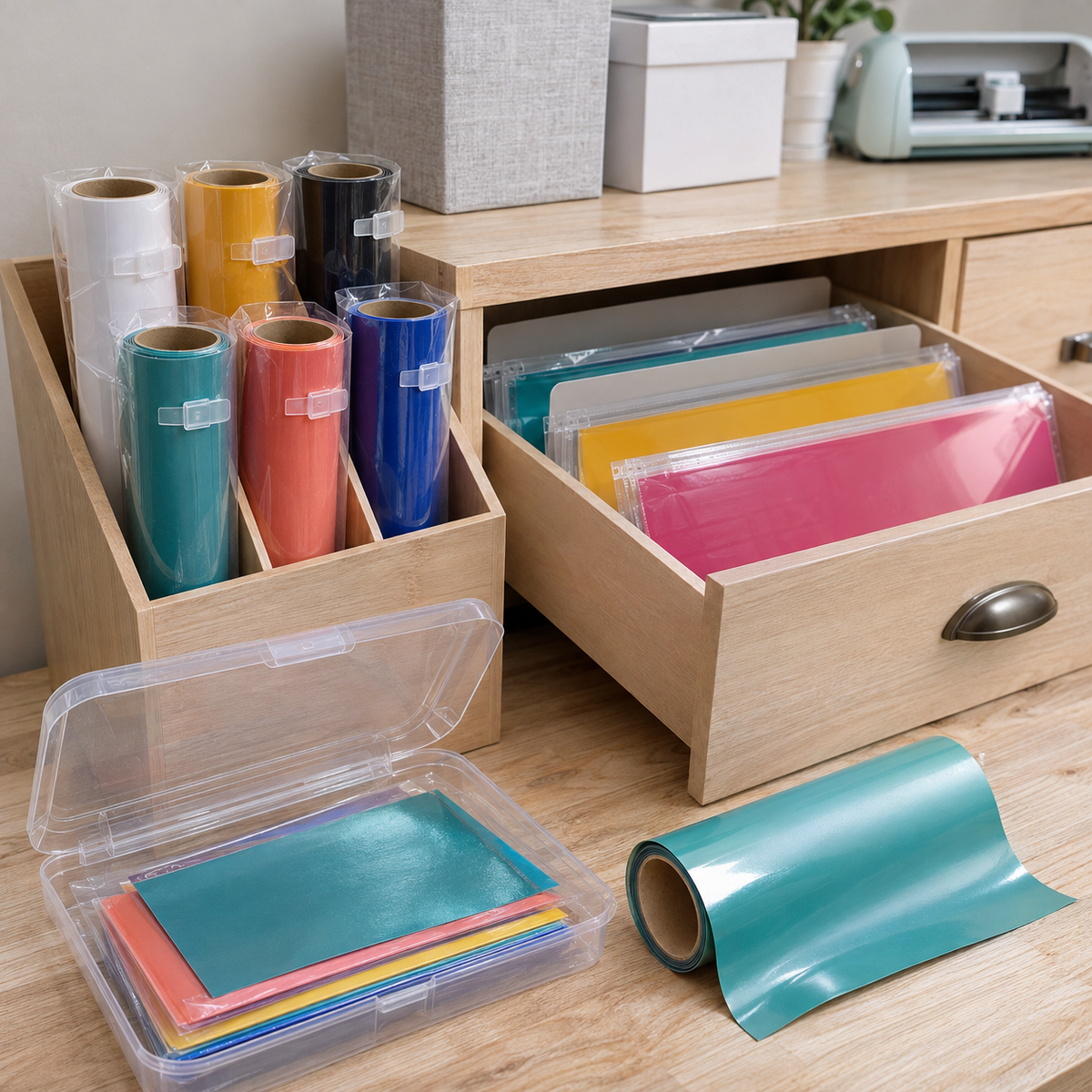
- Store rolls vertically or in a rack so they are not crushed. Wall-mounted dowels, vinyl racks, cubbies or tall bins all work well.
- Keep the original plastic sleeve or wrap rolls loosely in plastic to keep out dust.
- Secure the loose end with a small piece of low-tack tape or a roll clip so it does not unwind or get creased.
- Label every roll with the brand, material, press temperature and peel type. This saves time and mistakes later.
- Keep them away from windows and direct sunlight.
How to Store HTV Sheets and Scraps
- Store sheets flat in folders, binders with sheet protectors, file boxes or flat drawers.
- Sort by type, such as standard, glitter, metallic, puff and specialty, so you can find what you need quickly.
- Keep scraps big enough to use. Small pieces are perfect for layering, kids' shirts and test cuts. Our post on getting the most use out of your HTV has more ideas.
- Do not stack heavy items on top of sheets.
Need help setting up your space? Check out these life hacks for organizing your craft space.
Buy What You Will Use
The easiest way to avoid old vinyl is to rotate your stock. Buy small sheets or 5-foot rolls of colors you only use occasionally, and save bulk rolls for the colors you go through every week. Bulk rolls lower your cost per shirt, as we explain in why buying HTV in bulk is a good option, but only if you use them while they are fresh. Use a "first in, first out" system: put new rolls behind older ones so the older stock gets used first.
What About Specialty Vinyls?
Specialty materials like puff HTV, glow in the dark HTV and fluorescent HTV deserve extra care. Puff can lose its rise if exposed to heat before pressing, and fluorescent colors are more sensitive to light. Store them in closed bins and test before big jobs.
What About Adhesive Vinyl and DTF Transfers?
Permanent and removable adhesive vinyl follows similar rules: cool, dry and out of the sun. For DTF transfers, read our dedicated guide on how to store your DTF transfers, which recommends 60–75°F with humidity below 50%.
Frequently Asked Questions
Can I revive old HTV?
Not really. If the adhesive has degraded, no setting will fully restore it. You may get better results with slightly more pressure or a few extra seconds, but always test first.
Is it OK to store HTV in a garage?
It is best to avoid it. Garages often get very hot in summer and cold and damp in winter, which is hard on the adhesive.
Does HTV last longer once it is pressed?
Once applied, HTV is designed to last through many washes when you follow the care instructions. See our HTV aftercare guide.
HTV does not come with an expiration date, but how you store it decides how long it performs. Keep it cool, dry, dark and organized, test older rolls before customer work and rotate your stock. When it is time to restock, browse our vinyl packs or the full heat transfer vinyl collection.