
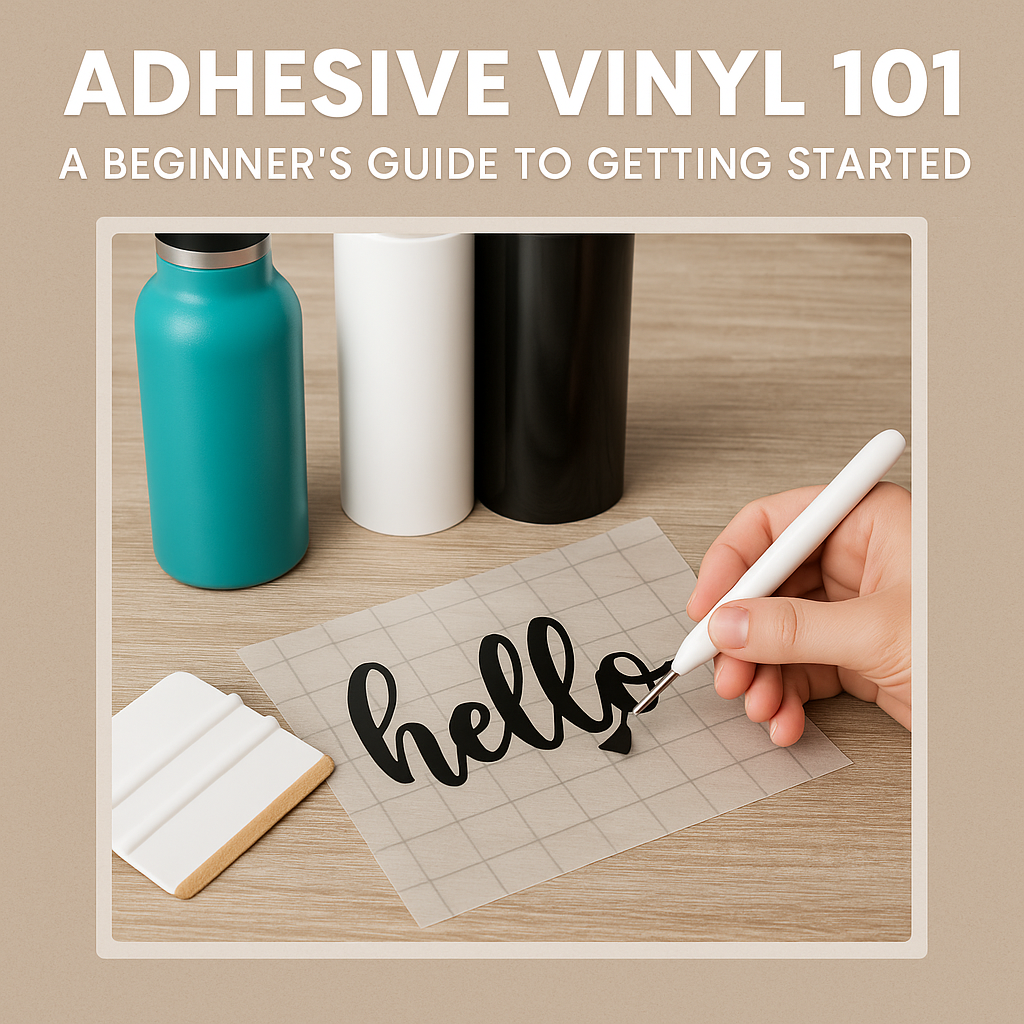
If you are stepping into the world of crafting, you have likely heard about adhesive vinyl. This versatile material is a favorite among DIY enthusiasts and professional sign makers alike, used to create everything from personalized water bottles to large-scale wall art. It’s a gateway to endless creative possibilities, but knowing where to start can feel overwhelming.
This guide will serve as your introduction to the fundamentals of adhesive vinyl. We’ll explain what it is, explore its common uses, and break down the key differences between the main types available. By the end, you'll understand which vinyl is right for your project and feel confident using high-quality products to bring your ideas to life.
What is Adhesive Vinyl?
Adhesive vinyl, often called "sticker vinyl," is a thin, flexible material with a pressure-sensitive adhesive on one side. It comes on a paper backing sheet that protects the adhesive until you're ready to apply it. Using a digital cutting machine like a Cricut or Silhouette, you can cut intricate designs, letters, and shapes from the vinyl. Once cut and weeded (the process of removing excess vinyl), you can transfer your design to a wide range of smooth, hard surfaces.
It’s the go-to material for projects that don't involve fabric. Think of it as a durable, custom-made sticker. From decorating your laptop to creating professional business signage, adhesive vinyl offers a clean and polished look.
Common Uses for Adhesive Vinyl
The versatility of adhesive vinyl is one of its greatest strengths. You can apply it to almost any non-porous surface. Here are some of the most popular applications:
- Home Decor: Create custom wall decals, label pantry containers, decorate mirrors, or personalize photo frames.
- Drinkware: Customize mugs, tumblers, and water bottles with names, monograms, or fun graphics.
- Car Decals: Show off your family, favorite hobby, or business logo with a durable decal for your car window.
- Signage: Make professional-looking signs for businesses, events, or home use on materials like wood, acrylic, or metal.
- Personalization: Decorate laptops, phone cases, notebooks, and binders to add a unique personal touch.
- Party & Event Decor: Craft custom banners, decorations, and party favors that match your theme perfectly.
The Two Main Types: Permanent vs. Removable Vinyl
The most important distinction to understand when working with adhesive vinyl is the difference between permanent and removable types. Choosing the right one is crucial for the success and longevity of your project.
Permanent Adhesive Vinyl (Outdoor)
Permanent adhesive vinyl is designed for long-lasting applications and projects that will be exposed to the elements. It features a strong, solvent-based adhesive that creates a powerful bond with the surface. Once it cures (which can take 24-48 hours), it becomes highly durable, water-resistant, and able to withstand wear and tear.
Our top recommendation for a permanent vinyl is Oracal 651. It’s considered the industry standard for performance and reliability.
Use Permanent Vinyl For:
- Car decals
- Outdoor signs
- Mugs, tumblers, and dishes that will be hand-washed
- Mailboxes
- Any project that needs to be durable and weather-resistant
While it's called "permanent," you can remove it, but it often requires heat and a solvent, and it may damage the underlying surface (like drywall) or leave behind a sticky residue.
Removable Adhesive Vinyl (Indoor)
Removable adhesive vinyl is made with a weaker, water-based adhesive. This allows it to stick firmly to surfaces but also to be removed cleanly without leaving residue or damaging the surface. It’s the perfect choice for temporary applications or for use on delicate surfaces like painted walls.
For removable projects, we suggest using Oracal 631. It has a beautiful matte finish that reduces glare, making it look like paint when applied to a wall.
Use Removable Vinyl For:
- Wall decals and murals
- Temporary holiday or party decorations
- Stencils for painting projects
- Decorating laptops or electronics (where you might want to change the design later)
- Labeling items in a way that can be easily updated
Removable vinyl is not ideal for items that will be handled frequently or exposed to water, as the adhesive is not strong enough to withstand those conditions.
How to Apply Adhesive Vinyl: The Basic Steps
Once you've chosen your vinyl and cut your design, the application process is straightforward.
- Cut Your Design: Use a Cricut, Silhouette, or other cutting machine to cut your design. Remember not to mirror the image (unlike with HTV).
- Weed the Excess Vinyl: Use a weeding tool to carefully remove all the negative pieces of vinyl that are not part of your design.
- Apply Transfer Tape: Cut a piece of transfer tape slightly larger than your design. Peel the backing off the transfer tape and apply it over your weeded vinyl design, burnishing (rubbing firmly) with a squeegee to ensure the vinyl sticks to the tape.
- Transfer to Your Surface: Peel the paper backing off the vinyl. Your design should now be stuck to the clear transfer tape. Carefully position it on your clean, dry project surface.
- Burnish and Remove: Once your design is in place, burnish it firmly onto the surface. Then, slowly peel the transfer tape away, leaving the vinyl design behind. It helps to peel the tape back at a 45-degree angle.
Adhesive vinyl opens up a new dimension of crafting that goes beyond fabric. By understanding the basics of permanent and removable types, you can confidently select the right material for any project. Whether you're creating a durable car decal with Oracal 651 or a temporary wall mural with Oracal 631, Atlanta Vinyl has the high-quality supplies you need to get started on your adhesive vinyl journey.