
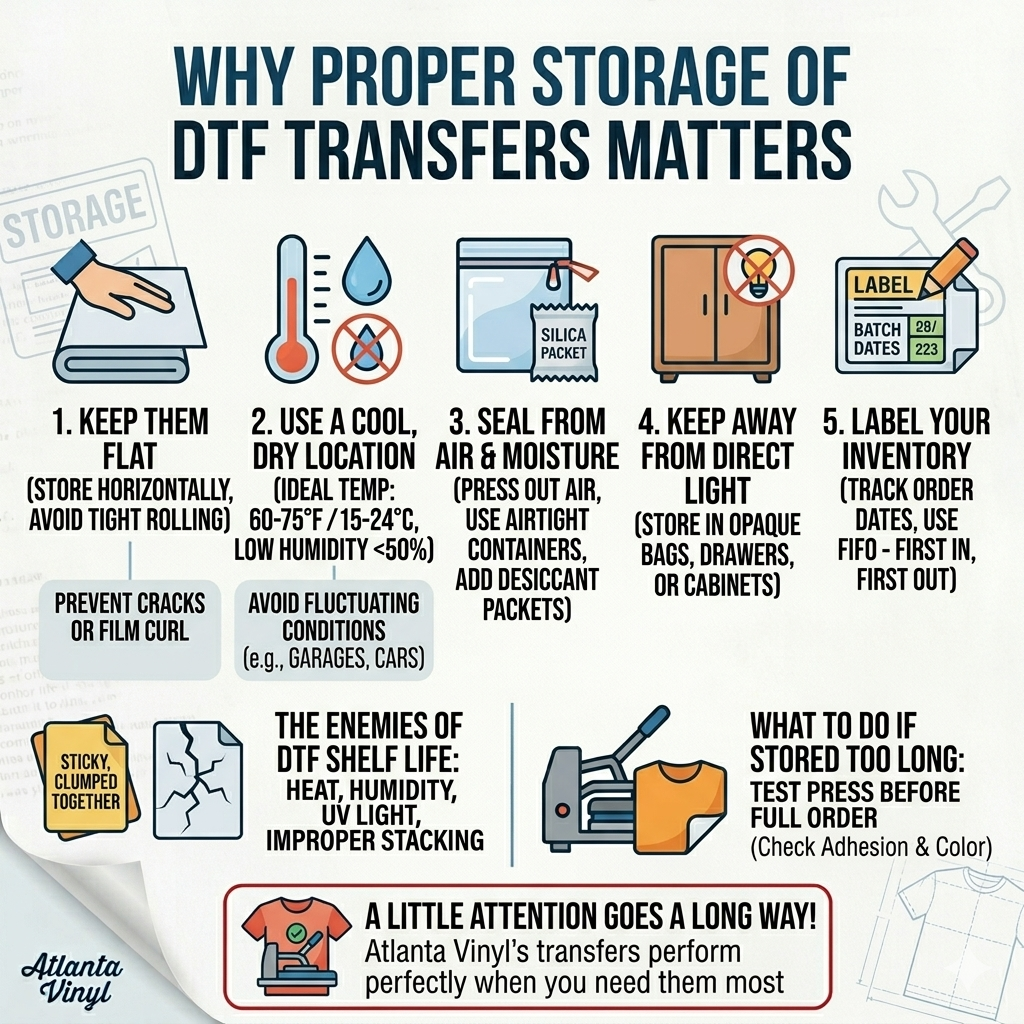
Why Proper Storage of DTF Transfers Matters
Whether you order DTF transfers in bulk or keep a small supply on hand, how you store them can make or break their quality. DTF transfers that are stored improperly can stick together, lose their adhesive properties, become brittle, or fail to adhere properly when pressed. The good news is that storing them correctly is easy — it just requires a few consistent habits.
How Long Do DTF Transfers Last?
Under ideal storage conditions, high-quality DTF transfers can last anywhere from 6 months to 2+ years. The shelf life depends on several factors: the quality of the transfer itself, the type of adhesive powder used, and most importantly, how and where you store them. Transfers stored in a hot, humid, or poorly sealed environment will degrade much faster.
The Enemies of DTF Transfer Shelf Life
Understanding what degrades your transfers helps you protect them:
- Heat: High temperatures soften the hot melt adhesive powder, causing it to become sticky and clump — and potentially causing transfers to bond to each other or to their packaging before you're ready to press them.
- Humidity and moisture: Moisture causes the adhesive to break down and can cause the PET film to warp or bubble, distorting your design.
- Direct sunlight and UV exposure: UV light can cause colors to fade over time and break down the inks, especially if the transfers are stored near windows.
- Pressure or improper stacking: Stacking too many transfers on top of each other without proper separators can cause them to stick together or distort.
Best Practices for Storing DTF Transfers
Keep Them Flat
Store your transfers horizontally and flat. Avoid rolling them tightly, as this can crack the ink layer or cause the film to curl. If you received them rolled, it's fine to keep them in a loose roll with a protective tube — just make sure they're not bent or kinked.
Use a Cool, Dry Location
The ideal storage temperature for DTF transfers is between 60–75°F (15–24°C) with low humidity (below 50% relative humidity). A climate-controlled room, a cool closet, or a filing cabinet works well. Avoid storing them in a garage, car, or near heating/cooling vents where temperatures fluctuate widely.
Seal Them from Air and Moisture
If you've opened a batch of transfers, keep any unused ones in a resealable plastic bag or an airtight container. Press out as much air as possible before sealing. You can add a silica gel desiccant packet to absorb any residual moisture.
Keep Away from Direct Light
Store transfers in opaque bags, a drawer, or a cabinet away from windows and fluorescent lighting. Even indirect UV exposure can cause color shifts in the ink over time.
Label Your Inventory
If you order multiple designs or batches, label each batch with the order date. Use older inventory first (FIFO — first in, first out) to prevent any transfers from sitting too long.
What to Do If Your Transfers Have Been Stored Too Long
If you have transfers that have been sitting for a while, do a test press before committing them to a full order. Press a test piece at your standard settings and peel. Check for adhesion strength, color vibrancy, and flexibility. If the transfer peels cleanly without issues, it's still good. If the adhesive is weak or the film cracks, it's time to order fresh inventory.
A little attention to storage goes a long way. By keeping your DTF transfers in a cool, dry, dark, and sealed environment, you'll protect your investment and ensure every press is clean and consistent. Atlanta Vinyl's transfers are produced to the highest standards — give them the right storage conditions and they'll perform perfectly when you need them most.