
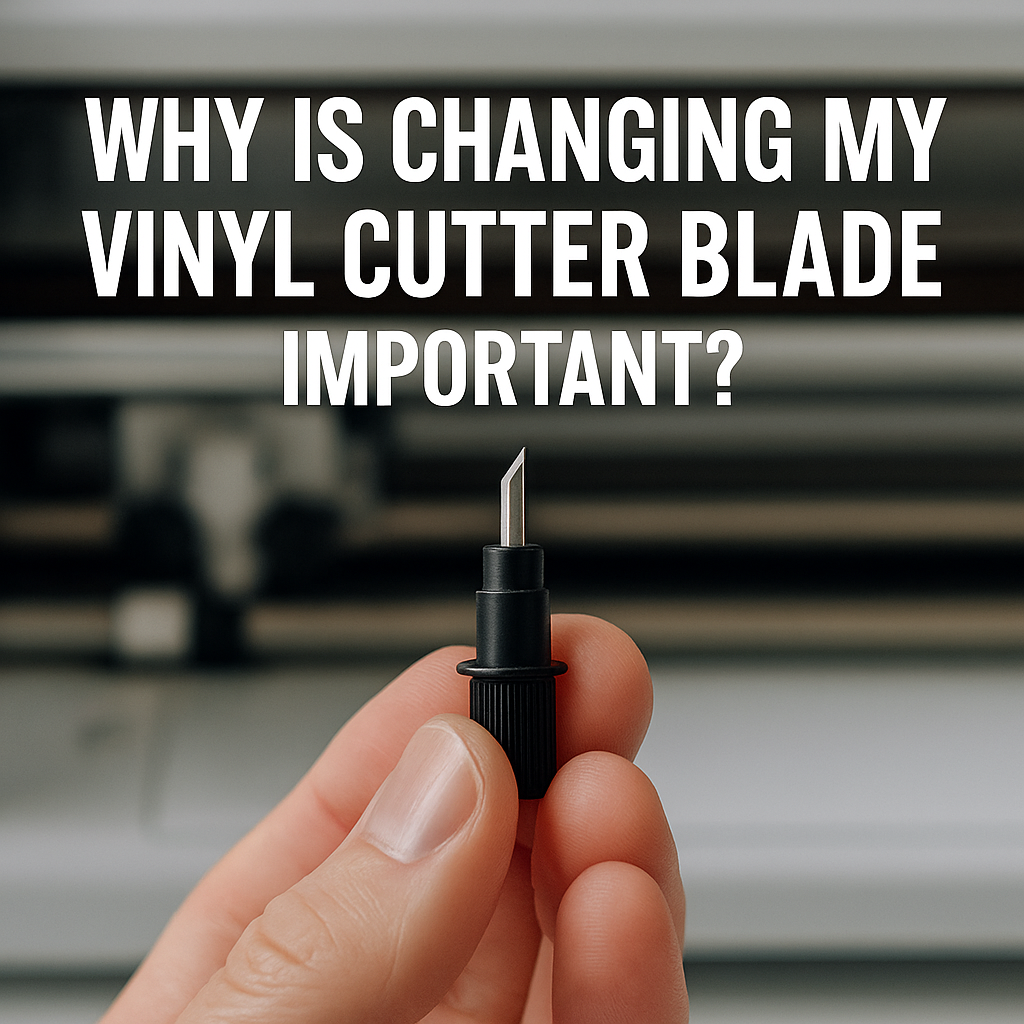
For anyone who works with a vinyl cutter, the goal is always the same: a clean, precise cut every single time. You spend time perfecting your design, choosing the right vinyl, and setting up your machine. But what if, after all that preparation, your cuts come out jagged, incomplete, or messy? The problem might not be your design or your machine settings. It could be something much smaller and often overlooked: your vinyl cutter blade.
The blade is the workhorse of your cutting machine. It’s the single point of contact that transforms a digital design into a physical reality. Just like any tool that relies on a sharp edge, from a chef's knife to a woodworker's saw, a vinyl cutter blade will dull over time. Understanding why and when to change it — and picking the right blade in the first place, as covered in our 45-degree vs. 60-degree blade guide — is fundamental to achieving professional-quality results and maintaining the health of your machine.
The Consequences of a Dull Blade
Using a dull blade is more than just a minor inconvenience; it can lead to a host of frustrating problems that waste time, material, and money. A sharp blade glides through the vinyl, making a clean incision. A dull blade, on the other hand, tears, drags, and pulls the material.
This dragging motion can cause several issues:
- Incomplete Cuts: The blade may fail to cut all the way through the vinyl, especially on intricate details or sharp corners. This makes the weeding process a nightmare, as parts of the design that should be separate remain attached.
- Jagged Edges: Instead of a crisp line, a dull blade produces a fuzzy or frayed edge, making your finished product look unprofessional.
- Vinyl Tearing and Bunching: A dull blade can snag the vinyl and pull it up from the backing paper, causing it to bunch up and ruin the entire cut.
- Damage to the Cutting Strip: The cutting strip is the narrow piece of plastic on your machine that protects the blade and provides a surface for it to cut against. A dull blade requires more downward pressure to cut, which can wear out and even gouge this strip, leading to inconsistent cuts and costly repairs.
- Strain on the Cutter's Motor: Forcing a dull blade through material puts extra strain on your vinyl cutter's motor and carriage assembly. Over time, this can lead to premature wear and tear on the machine's most critical components.
Signs It's Time for a New Blade
Recognizing the symptoms of a dull blade is the first step toward preventing these problems. Your machine and your materials will give you clear signals that a change is needed.
Your Weeding Becomes Difficult
This is often the first and most obvious sign. If you find yourself struggling to weed designs that used to be easy, or if the vinyl isn't separating cleanly from the carrier sheet, your blade is likely the culprit. You might find that corners are not cut sharply, or that small pieces of the design lift up when you try to remove the excess vinyl.
You Notice a Decline in Cut Quality
Take a close look at your cuts. Are the edges as sharp as they used to be? A magnifying glass can help you inspect the details. A dull blade will leave behind slightly torn or uneven lines instead of the perfectly smooth edges you get with a sharp one. You may also notice that circles are not perfectly round or that straight lines have a slight wobble.
The Blade is Making More Noise
A sharp blade moves almost silently through the vinyl. A dull blade, however, can create a noticeably louder tearing or dragging sound as it struggles to cut the material. If you notice a change in the sound your machine makes during cutting, it’s a good idea to inspect the blade.
You Need to Increase the Cutting Force
Have you found yourself gradually increasing the force setting on your machine to get the same results you used to get at a lower setting? This is a classic sign that the blade has lost its edge. While you might get a decent cut by adding more pressure, this is a temporary fix that puts unnecessary stress on both your blade and your machine.
Visible Damage to the Blade Tip
Sometimes, the issue is not just dullness but actual damage. A blade tip can chip or break if it hits a hard surface or is used on abrasive materials. A visual inspection (a magnifying glass is very helpful here) can reveal if the very tip of the blade is missing or deformed. A chipped blade will never cut correctly, no matter the pressure setting.
The Benefits of a Sharp Blade
Regularly changing your blade isn't just about avoiding problems; it's about unlocking the full potential of your vinyl cutter and your creative projects.
- Precision and Detail: A sharp blade allows you to cut incredibly intricate designs with fine lines and sharp corners, opening up more creative possibilities.
- Efficiency and Speed: Clean cuts lead to fast, effortless weeding. This saves you a significant amount of time and frustration, especially on large or complex jobs.
- Material Savings: By eliminating bad cuts, torn vinyl, and weeding mishaps, you reduce material waste, which saves you money in the long run.
- Machine Longevity: Using a sharp blade with the correct force setting reduces wear and tear on your cutter’s motor and cutting strip, helping to prolong the life of your investment.
Tips for Blade Maintenance and Lifespan
How long a blade lasts depends on several factors, including the type of materials you cut, how frequently you use your machine, and the complexity of your designs. However, you can extend your blade's life with a few simple practices.
- Keep it Clean: Small bits of vinyl and adhesive can build up on the blade tip. Periodically remove the blade from its housing and gently clean it with a soft cloth and a bit of isopropyl alcohol — a good set of crafting tools makes this maintenance routine much easier.
- The Aluminum Foil Trick: A popular tip among crafters is to gently stab the blade into a crumpled ball of aluminum foil 20-30 times. This can help to clean off residue and hone the blade's edge, effectively sharpening it slightly and extending its life.
- Use the Right Blade for the Job: Different blades are designed for different materials. Using a standard blade for thick or abrasive materials like glitter HTV or cardstock will dull it very quickly. Use a heavy-duty or deep-cut blade for these applications.
- Store Blades Properly: When not in use, keep spare blades in their original protective packaging to prevent the tips from getting damaged.
Don’t Let a Dull Blade Dull Your Creativity
A vinyl cutter blade is a small, inexpensive consumable, but it has a massive impact on the quality of your work. Treating it as a critical component of your workflow and changing it regularly is one of the easiest and most effective things you can do to ensure consistently beautiful results. By listening to your machine and paying attention to the quality of your cuts, you can stay ahead of the problem and keep your projects looking sharp.
Don't let a worn-out blade stand between you and a perfect cut. Explore our selection of vinyl cutting machines to find the right fit for your projects and materials.