
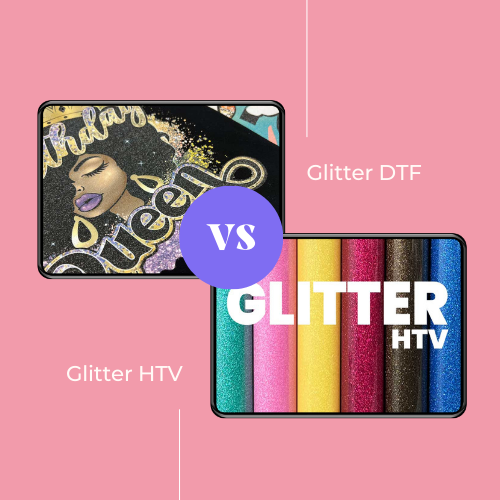
For anyone in the custom printing or crafting world, glitter is a go-to choice for creating designs that truly stand out. Two popular methods for achieving stunning, glittery effects are Glitter DTF (Direct-to-Film) transfers and glitter heat transfer vinyl (HTV). While both methods add sparkle, they’re fundamentally different in how they work and what they’re best suited for. Let's break it down!
What Are Glitter DTF Transfers?
Glitter DTF transfers combine the traditional DTF printing process with glitter particles to create eye-catching designs with a shimmering effect. Here’s a quick overview of how they work:
-
Materials Used
Glitter DTF prints use specialized DTF films coated with glitter and adhesive powders. These transfers are printed with a digital printer using water-based inks and cured for durability. -
Application Process
Once the design is printed and cured, the glitter DTF transfer is heat-pressed onto the substrate. They work well on a variety of materials, including cotton, polyester, blends, and even some non-fabric surfaces. -
Durability
Glitter DTF transfers are robust and can withstand repeated washing without losing their shine or rich colors. The glitter particles stay embedded in the design, making it long-lasting. -
Visual Effect
The glittery finish is vibrant and detailed, offering more depth and customization than traditional glitter vinyl.
What Makes Glitter Heat Transfer Vinyl (HTV) Different?
Glitter HTV offers another way to bring sparkle to your designs. It’s a pre-cut vinyl material that has glitter particles embedded in the surface. Here’s what sets it apart:
-
Materials Used
Glitter HTV comes as a sheet or roll of vinyl with a pre-glittered surface. The designs are created by cutting out shapes or patterns with a vinyl cutter. -
Application Process
Once the design is cut and weeded (removing excess vinyl), the HTV is heat-pressed onto the material. Like DTF transfers, glitter HTV is applied using heat, but it adheres only to fabrics, not hard surfaces. -
Durability
Glitter heat transfer vinyl is durable but can peel or crack over time if not applied properly. Its glitter finish also fades slightly after many washes. -
Visual Effect
Glitter HTV delivers a bolder, consistent sparkle, but it’s limited by the solid colors of the vinyl sheets. Unlike glitter DTF, it doesn’t allow for intricate, multi-colored designs unless you are doing something such as sublimating onto White Glitter.
Comparing Glitter DTF Transfers and Glitter HTV
Here’s a side-by-side comparison to help summarize the differences:
| Feature | Glitter DTF Transfers | Glitter HTV |
|---|---|---|
| Material Compatibility | Works on fabric, blends, and hard surfaces | Limited to fabrics only |
| Design Flexibility | Custom printable designs with gradients and details | Limited to pre-cut shapes in solid colors |
| Durability | Long-lasting and resistant to peeling | Durable but prone to peeling over time |
| Application Process | Printed and heat-pressed in one step | Requires cutting, weeding, and heat-pressing |
| Visual Effects | Detailed, vibrant glitter effects | Consistent glitter in solid, bold colors |
Which One Should You Choose?
The decision between glitter DTF transfers and glitter HTV depends on your project’s needs. Here’s some guidance:
-
Choose Glitter DTF Transfers If:
You want intricate, multi-colored designs, or you need a solution that works on a variety of materials. Glitter DTF is also a great choice for commercial projects where durability and detail are essential. -
Choose Glitter HTV If:
You’re crafting bold, simple shapes or monograms on fabric. It’s ideal for smaller, DIY projects where you don’t require advanced printing capabilities or multi-colored designs.
Both glitter DTF transfers and glitter HTV have their place in the world of custom printing and crafting. Glitter DTF offers versatility and precision for detailed designs across many surfaces, while glitter HTV is perfect for bold, eye-catching designs on fabric. By understanding the strengths of each and considering your project’s requirements, you can choose the perfect method to bring your creative vision to life!