
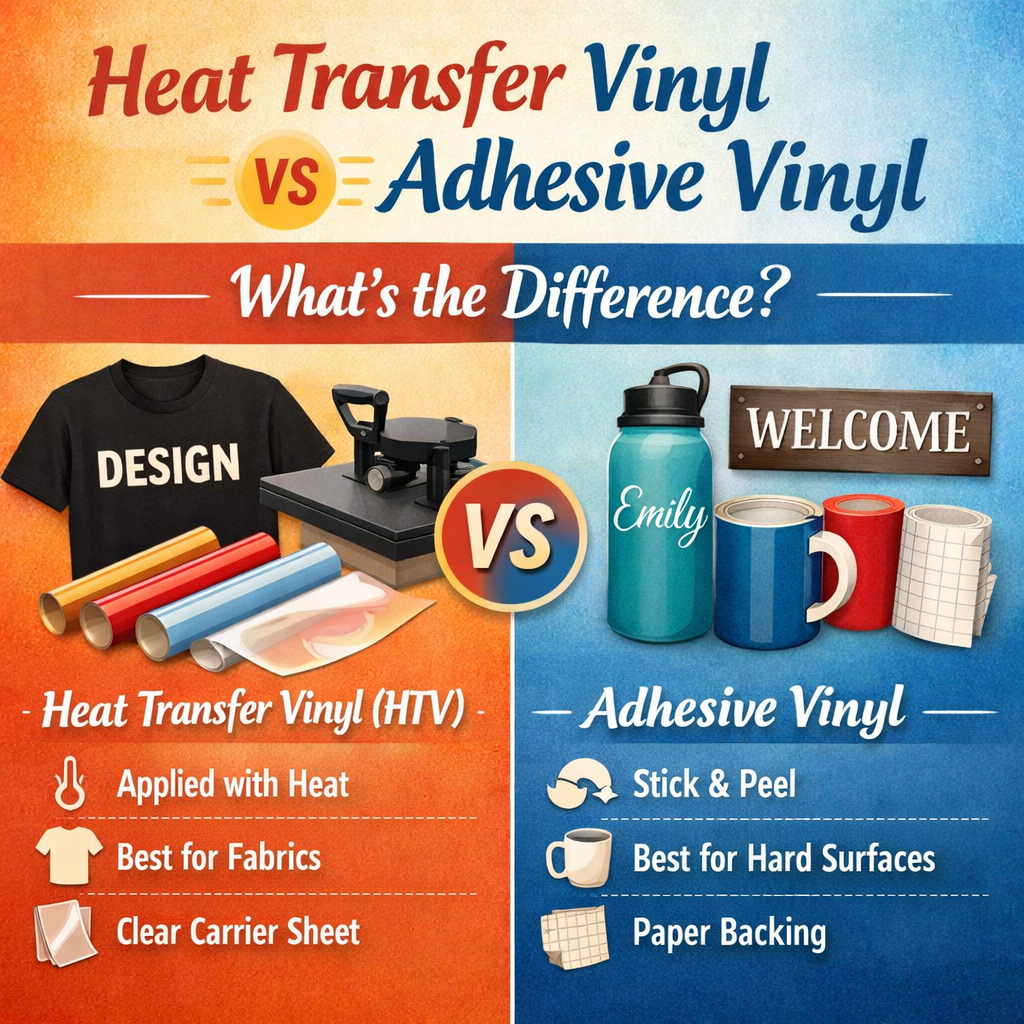
When you first step into the world of vinyl crafting, it’s easy to feel overwhelmed by the terminology. You see terms like HTV, 651, iron-on, and permanent vinyl, and it can be confusing to figure out what they all mean. The two most fundamental categories you need to understand are Adhesive Vinyl and Heat Transfer Vinyl (HTV). While they may look similar in the package, they are designed for completely different purposes and are not interchangeable.
Understanding the core differences between these two materials is the most important first step in any successful vinyl project. Choosing the wrong one will lead to a failed project, wasted materials, and a lot of frustration. This guide will break down everything you need to know about adhesive vinyl and HTV, so you can confidently select the right material for your project every time.
What is Heat Transfer Vinyl (HTV)?
Heat Transfer Vinyl, often called HTV or iron-on vinyl, is a specialty material designed to be applied to fabrics and other soft surfaces that can withstand high temperatures. It has a heat-activated adhesive on one side that bonds permanently with the material when pressed with sufficient heat and pressure.
HTV comes on a clear, shiny, and sometimes sticky carrier sheet. This sheet serves two purposes: it holds your design together after you’ve cut and weeded it, and it protects the vinyl from the direct heat of your press or iron. You always cut your design into the dull, adhesive side of the vinyl, leaving the shiny carrier sheet intact.
How is HTV Applied?
Application requires a combination of three things: heat, pressure, and time.
- Design and Cut: You create or upload your design into your cutter's software and mirror the image before cutting. This is a critical step because you are cutting from the back.
- Weed: You remove the excess vinyl, leaving only your design on the clear carrier sheet.
- Press: Using a heat press or a household iron, you apply heat and firm pressure for a specific amount of time (usually 10-20 seconds at around 305-320°F). The heat activates the adhesive, which melts into the fabric fibers.
- Peel: After pressing, you peel off the clear carrier sheet, leaving the design permanently bonded to the fabric.
When to Use Heat Transfer Vinyl (HTV)
Use HTV for any project involving fabric or soft goods. Think of it as your go-to for anything you can wear.
- Apparel: T-shirts, hoodies, sweatshirts, and jackets.
- Accessories: Canvas tote bags, hats, socks, and fabric headbands.
- Home Decor: Customizing decorative pillows, blankets, and fabric banners.
What is Adhesive Vinyl?
Adhesive vinyl, sometimes called sticker vinyl, is exactly what it sounds like: a thin, flexible material with an adhesive backing, much like a sticker. It is designed to be applied to hard, smooth, non-porous surfaces. It comes on a paper backing sheet that protects the adhesive until you’re ready to apply it.
Unlike HTV, adhesive vinyl does not require heat. You simply cut your design, remove it from the paper backing using transfer tape, and apply it to your final surface. Adhesive vinyl primarily comes in two types: removable and permanent.
- Removable Adhesive Vinyl (e.g., Oracal 631): This type has a water-based adhesive that allows it to be removed from a surface without leaving residue or damaging the paint. It's ideal for indoor, temporary applications.
- Permanent Adhesive Vinyl (e.g., Oracal 651): This has a much stronger, solvent-based adhesive designed for long-lasting applications and to withstand the elements. It’s perfect for outdoor use or items that will be handled frequently.
How is Adhesive Vinyl Applied?
The process for applying adhesive vinyl is completely different from HTV and requires no heat.
- Design and Cut: You create your design and cut it into the colored vinyl side. You do not need to mirror the image.
- Weed: You remove the excess vinyl from the paper backing.
- Use Transfer Tape: You apply a sheet of transfer tape over your weeded design and use a squeegee to burnish (rub) it, lifting the vinyl design off the paper backing.
- Apply: You then place the transfer tape with your design onto the final surface (like a mug or window) and use the squeegee again to adhere the vinyl and remove air bubbles.
- Peel: Finally, you carefully peel away the transfer tape, leaving your vinyl decal perfectly placed on the surface.
When to Use Adhesive Vinyl
Use adhesive vinyl for any project with a hard, smooth surface. Think of it as creating custom decals or stickers.
- Drinkware: Personalizing mugs, tumblers, water bottles, and wine glasses.
- Home Decor: Creating wall decals, labeling pantry canisters, or decorating wooden signs.
- Signage: Making business window signs, welcome signs for weddings, or mailbox numbers.
- Vehicle Decals: Customizing car windows with family stickers or business logos.
Key Differences at a Glance
|
Feature |
Heat Transfer Vinyl (HTV) |
Adhesive Vinyl |
|---|---|---|
|
Common Names |
HTV, Iron-On |
Sticker Vinyl, Decal Vinyl |
|
Application Method |
Heat Press or Iron |
Transfer Tape (No Heat) |
|
Adhesive |
Heat-Activated |
Pressure-Sensitive (Like a Sticker) |
|
Backing |
Clear, Shiny Carrier Sheet |
Paper Backing |
|
Mirror Image? |
Yes, always mirror before cutting |
No, do not mirror |
|
Best Surfaces |
Fabrics (Cotton, Polyester, Blends) |
Hard, Smooth Surfaces (Glass, Plastic, Metal, Wood) |
|
Common Projects |
T-Shirts, Hoodies, Tote Bags |
Mugs, Tumblers, Wall Decals, Car Stickers |
A Simple Trick to Tell Them Apart
If you have a scrap piece of vinyl and aren’t sure what it is, look at the backing. If it has a clear, shiny plastic carrier sheet, it’s almost certainly HTV. If it has a paper backing with a brand name or grid printed on it, it’s adhesive vinyl.
Mastering the difference between Heat Transfer Vinyl and adhesive vinyl is the first and most crucial skill for any new crafter. By remembering that HTV is for heat and fabrics and adhesive vinyl is for stickers and hard surfaces, you'll be well on your way to creating amazing projects without frustration. Always double-check your material and remember to mirror your designs for HTV!
Now that you can confidently tell these two essential materials apart, you’re ready to start creating. Explore the wide selection of high-quality heat transfer and adhesive vinyl at Atlanta Vinyl. We carry all the colors and finishes you need from trusted brands like Siser and Oracal to bring your vision to life.